My special thanks to Phil Groom, the London School of Theology bookshop manager, for some seriously generous special deals! I filled my bags with numerous terrific volumes, and in the process cleaned out all of the money I had received for Christmas from relatives. In other words, Santa delivered (albeit a tad late):
1) Four Views on Salvation in a Pluralistic World (with contributions from John Hick, Pinnock and McGrath). I love the format of this series.
2) Paul and First-Century Letter Writing, by E. R. Richards. This attractive volume will not only serve many a pleasurable hour of study, but will fill a gaping hole in my own knowledge.
3) Beyond NT Theology, by Heikki Räisänen. Oh yes, oh yes! I’m rather excited about devouring this one.
4) Paul. A Jew on the Margins, by Calvin Roetzel. Just £5! If it weren’t for the stubble, Phil, I would kiss your rosy cheeks …
5) Narrative Dynamics in Paul, ed. Bruce Longenecker. This is a superb collection of essays by world renowned scholars.
6) Paul, by C.K. Barrett. I had to finally buy this little gem.
Most of these were half-price!
Finally, thank you to those of you who have e-mailed me in the past few days. Unfortunately, my parents are only equipped with one of these demonic ‘dial-up’ modems from hell, and this has made accessing my 1und1 account rather testing. I’ll be sure to reply as soon as possible, and certainly when I return from holiday.
Tuesday, January 23, 2007

Saturday, January 20, 2007
Bauckham’s Jesus and the Eyewitnesses - Part 12
 This is a truly fascinating section in Bauckham’s argument. Enjoy the read!
Click here for the (continually updated) series outline.
--
The inclusio of eyewitness testimony
Do the other Gospels evidence anything comparable to Luke’s prologue? Building on the key observation made explicit in Luke’s prologue - that principal eyewitnesses were those who had been present ‘from the beginning’ - Bauckham argues that the Gospels evidence a ‘literary device’ used to mark the principal eyewitnesses. This is a bold move, and one can arguably appreciate this suggestion only in the light of his case concerning the importance of principal eyewitnesses in ancient historiographical practice.
This ‘device’ found first in Mark’s Gospel, and observed in the mention of Peter’s name at both the beginning and end of the story, emphases that this eyewitness was present from the beginning to the end of Jesus’ ministry. The first reference (1:16) involve as an awkward double mention of Simon’s name, while the final reference in 16:7 forms ‘an inclusio around the whole story’. What evidence is there to support this claim?
First, Papias’s witness always suggested Peter’s hand in the Markan Gospel. [Bauckham’s whole argument will thus fly in the face of Joel Marcus’ claim that ‘were it not for Papias, one would never suspect that the Second Gospel were particularly Petrine.’ J. Marcus, Mark 1-8 (AB27; New York: Doubleday, 1999) 24.]. Second, the frequency of Peter’s name in Mark’s Gospel is indicative of the important part Peter played in this narrative. Third, Peter ‘is actually present through a large proportion of the narrative from 1:16 to 14:72’. However, also important is the evidence that comes to light when this inclusio device in Mark is compared with its reception and change in the Gospels of John and Luke.
Both John and Luke preserve the Markan ‘Petrine inclusio’, thus indicating their indebtedness to the Petrine testimony within Mark which they use for their own Gospels. However, the inclusio is altered by both J and L in such a way that indicates its presence was recognised by both John and Luke, and was exploited to make a different claim. Bauckham’s analysis of the material in the fourth Gospel leads to the conclusion that John:
‘uses the inclusio of eyewitness testimony in order to privilege the witness of the Beloved Disciple, which this Gospel embodies. It does so, however, not simply by ignoring the Petrine inclusio of Mark’s Gospel, but by enclosing a Petrine inclusio within its inclusio of the Beloved Disciple’ (129).The beloved disciple is introduced at the beginning of the narrative unobtrusively ‘but rather immodestly in that he displaces Peter from the position of absolute priority’. Put directly: ‘John’s Gospel thus uses the inclusio of eyewitness testimony in order to privilege the witness of the Beloved Disciple’. Indeed, John’s Gospel seems to imply a friendly competition between Peter and the Beloved disciple such that the importance of the Petrine testimony (via Mark – Bauckham considers it most plausible that John expected his readers knew of Mark [R. Bauckham, ‘John for Readers of Mark,’ in R. Bauckham ed., The Gospels for All Christians: Rethinking the Gospel Audiences (Grand Rapids: Eerdmans/Edinburgh: T. & T. Clark, 1997) 147-171.]) is played off against that of John. Bauckham sums up:
‘So three of the four Gospels evidently work quite deliberately with the idea that a Gospel, since it tells the whole story of Jesus, must embody the testimony of witnesses who were participants in the story from beginning to end - from the time of John the Baptist’s ministry to the time of the resurrection appearances. These three Gospels all use the literary device of the inclusio of eyewitness testimony in order to indicate the main eyewitness source of their story. This does not, of course, exclude the appropriation also of material from other eyewitnesses, and we shall see that these Gospels also do that’ (131)Matthew’s Gospel seems uninterested in alluding to the principle of eyewitness testimony, a point coherent with the uniquely Matthian feature that he adds no names ‘to those occurring already in Mark, while actually dropping several of the names in Mark’ (132). However, Luke’s Gospel, like John’s, shows a striking re-appropriation of Mark’s inclusio, and includes another of his own indicating the presence of the female eyewitness sources. While Luke is, like John, dependant on the Petrine tradition through Mark, and indicates this in the broadest inclusio, the mention of the names of the women in Luke at both 8:2-3 and 24:5-7 form another inclusio, ‘bracketing all but the earliest part of Jesus’ ministry’, indicating Luke’s reliance on their testimony. Striking is that Luke doesn’t refer to the women by name, as does Matthew, Mark and John, when they are present at the cross. ‘Instead, he reserves that information until the end of his story of the women’s visit to the empty tomb: ‘Now it was Mary Magdalene, Joanna, Mary the mother of James, and the other women with them who told this to the apostles (24:10).’ This implies that Luke was careful to only name the women to indicate the end of the inclusio of their eyewitness.
Naturally, a question that would be interesting to pursue involves the nature and significance of Matthew’s Gospel, especially if it seems not to allude to eyewitness testimony.
Friday, January 19, 2007
Räisänen & Chips
 It’s good to be back in England, especially because we managed to take off and land in near hurricane storms! I just enjoyed a bowl of English ‘Ready Brek’ and after we’ve had a stroll through some local second hand bookshops in Banstead, we will enjoy a plate of good ol’ English chips - the only sort worth eating, i.e big fat lumps of potato glued together in a greasy mass of goo.
Given the delays because of the storms, I had a chance to get a nice amount of reading done. And I’ve got to say, during the process I’ve changed my mind on Heikki Räisänen’s Paul and the Law. There is much that speaks for his argument, and despite the occasional dubious reasoning (i.e the sort that claims that the plausibility of his argument does not depend on a credible reconstruction of the origin of these Pauline “contradictions”’’), there is plenty in Heikki Räisänen’s thesis that now makes a bundle load of sense to me. Many of his arguments and challenges still need to be grappled with, and not dismissed with the wave of an ‘of course Paul was not so inconsistent’ wand. I suspect that the matters Räisänen raises could/should busy another generation of Pauline scholars.
Wednesday, January 17, 2007
England
 For the next week and a half (until the end of the month) I shall be on holiday, visiting family and friends in England. This is also going to be a lovely chance to dip into a few of London’s best theological bookshops. YeeHaaa!
I can hear my wife fervently praying right now: ‘Lord, please stop my husband from going mad and buying too much with money we just don’t have’.
Naturally, I was prepared for such praying as this, so I prayed in faith yesterday that God would do the opposite of whatever my wife would pray today, so I’m safe enough.
Naturally, this means that my blogging will slow down, but it will by no means stop. In fact, I plan, among other things, to whip through more of the Bauckham series.
I shall still be accessing my e-mail, so if you get no reply from me then it is probably best to take it personally.
Bauckham’s Jesus and the Eyewitnesses - Part 11
 The next two chapters I will overview in a little more depth for no other reason than simply that I found them fascinating! The chapters following will mostly be summarised in only one post.
Click here for the series outline.
Chapter 6. Eyewitnesses “from the Beginning”
The following chapter is a creative and learned discussion addressing the issue that scholars ‘have often supposed that the Gospel writers cannot have attached much importance to eyewitness testimony since they do not indicate named eyewitness sources of the traditions they use’. While in previous chapters Bauckham has suggested that specific named individuals in the Gospels can be accounted for in that they were eyewitnesses, and that the lists of the Twelve serve to name an official body of eyewitnesses, in this chapter he attempts, in a two-stage argument, to maintain the Gospel writers did indeed have their own way of indicating eyewitness sources.
“From the beginning”
The first part of the argument maintains that ‘in the early Christian movement a special importance [was] attached to the testimony of disciples who had been eyewitnesses of the whole ministry of Jesus, from its beginning at the time when John was baptizing, and whose witness extended to the resurrection appearances’. The whole ministry of Jesus, at least in light of Acts 1:21-22; 10:36-42; John 15:26-27, was seen to encompass the events including and sandwiched between Jesus’ baptism and his resurrection. Naturally, the Twelve would have been specially qualified and ‘authoritative’ witnesses of this Christ-story understood in its broadest sense, even if they were not alone. But do the Gospels evidence such an understanding of eyewitnesses?
The preface to Luke's Gospel
Important evidence is found in Luke’s prologue. First, the mention of auvto,ptai in Luke 1:2 is discussed. While Bauckham (here following Loveday Alexander’s extensive study) is clear that this word should not be understood forensically but rather as referring to ‘firsthand observers’, the main point involves noting the historiographical associations in the wider context. This leads to the proposition that the phrase ‘from the beginning’ (avpV avrch/j) should be seen not as ‘an evocation of the authority of antiquity in hellenistic culture or a reference to the authoritative ancient sources of an oral tradition’, but rather ‘a claim that the eyewitnesses had been present throughout the events from the appropriate commencement of the author's history onwards’. Furthermore, the evidence in the prologue coheres well with the historiographical principle of choosing the appropriate starting-point for a history (cf. the reference to Plutarch and Josephus, C. Ap. 1:47). Thus, the preface to Luke’s Gospel evidences an understanding of the principal eyewitness – as those who had been present ‘from the beginning’ in such a way that, while perhaps just common sense on Luke’s part, reflects historiographical principles.
The main thrust of Bauckham’s argument is to affirm the importance of eyewitnesses ‘from the beginning’ in early Christianity. These eyewitnesses were also, Bauckham argues, the u`phre,tai geno,menoi tou/ lo,gou,. Indeed, the identification of the eyewitnesses with these servants of the word is best seen as a grammatical necessity such that those who were eyewitnesses of the whole of Jesus’ ministry thereby later qualified to be servants of the word. Of course, while these servants may not be reduced to Twelve, it would certainly have included them.
Tuesday, January 16, 2007
The Biblical Canon
 When I read an Amazon review about a theologically/biblically related book such as the following:
‘Keep in mind that while the author claims to be a Christian, he is not a Christian who believes the bible. He does not for example believe that 2 Peter is written by Peter, nor that the pastoral epistles are written by Paul. This is the kind of unbelief that undergirds all the arguments set forth. And make no mistake, the whole book is an argument in favour of the author’s theory [editors note: funny that!!!]. His theory is not so much that there is an open canon, but rather there isn’t really a canon at all, books can go in and out of the “canon” as per the community’s practices. It’s all very wishy-washy thinking’... my first reaction is to want to buy it, and give it to all of my friends as quickly as possible.
Those kind words were written by a reader of Lee Martin McDonald’s The Formation of Christian Biblical Canon, here.
You will be hearing more about Lee McDonald’s new work, The Biblical Canon: Its Origin, Transmission, and Authority, on this blog in due course. Until then, have a read of this interview between Danny Zacharias and McDonald about the book.
Danny’s last question: What are you hoping your latest publication, and all of your work on the canon, will bring to the church?
McDonald answers: Honesty and humility when we stand before the Scriptures with an inquiring mind and with obedience to the call of God rather than with deception and arrogance about the traditions and Bible we profess to love. The church is better served with honesty and integrity than with arrogant attitudes about a complex subject that does not fully discuss or appreciate the complexity of the issues at hand.
Monday, January 15, 2007
E-mailing me
UPDATE 4 (10:45pm, 16.01.2007): Despite the last update, the official position is that I still deny everything.
UPDATE 3 (10:45pm, 16.01.2007): Not that I'm admiting that I created the dancing-fairy Wright or anything, but this is all happening as judgment, isn't it? - don't touch the Lord's anointed, etc.
UPDATE 2 (10:45pm, 16.01.2007): Though I am receiving e-mail's a day late, I'm glad to say that 1und1.de have informed me that none will be lost, so I will receive you e-mails at somestage. In other words, no need to resend!
UPDATE (12:30am, 16.01.2007): My server is still not frigging sending me mail. If you needed to resend, it is probably best that you wait till tomorrow.
If anyone reading this sent me an e-mail in the last two days, please could you resend as my server was kind enough to inexplicably delete all of my recent incoming mail - so I don't even know who wrote me.
Naturally, I'm none too pleased with 1und1.de ... *grumpily mutters something mean about 'German efficiency'*
West on Fitzmyer's forthcoming
 I totally forgot to mention this last week, but our friend Jim West finished his superb series on Joseph Fitzmyer’s forthcoming book, The One Who Is To Come.
Here is the final post which collects together all of his posts.
One wonders if Fitzmyer is being fair in the scope of what he considers ‘messianic’, and the names J.C. O’Neill and W. Horbury spring to mind. I’m also curious to read more of the chapter ‘The Septuagint’s Interpretation of Some Old Testament Passages’ given certain methodological issues such as the problems of knowing the original Hebrew, and the simple stating of the ‘LXX’ (I say this as my attention has recently been drawn to the work of M. Peters of Duke University – thanks David!). But further judgment shall have to await the publication of the work.
I deny everything
Wright is back in the news, this time here. Note Mike Bird's informative response in the comments. Speaking of the good Bishop, if anyone, in light of my earlier post, found this wee animation to be bordering blasphemous:
 ... then whatever you do, please don’t click here.
I shake my judgmental head solemnly. The things people waste their time on ...
And don’t look at me like that!
*Innocent face*
 ... then whatever you do, please don’t click here.
I shake my judgmental head solemnly. The things people waste their time on ...
And don’t look at me like that!
*Innocent face*
Sunday, January 14, 2007
Bauckham’s Jesus and the Eyewitnesses - Part 10
 OK, I think I’ll speed up this series and attempt to finish it sooner rather than later.
Click here for the series outline.
Differences between the lists of the Twelve
However, to maintain this argument (cf. the previous post here), Bauckham must deal with the obvious objection that the differences in the lists suggest that the members of the Twelve were no longer accurately remembered.
Bauckham first stresses that the differences between the lists are not great. They exhibit the same basic structure of three groups of four, with the same person mentioned first always, and Judas likewise always last (I would add that such accuracy and variation in remembering a list like this is typical of the findings in memory studies – I can’t remember if Bauckham touches on this point later in chapter 13 and ‘Eyewitness Memory’) Bauckham, however, goes on to suggests conceivable redactional reasons as to why Mark, Matthew and Acts changed the order of some of the names.
However, the Mark/Matt Thaddaeus becomes the Judas of James in Luke/Acts, so there appears to be at least one instance of real discrepancy between the lists. This has led to some bloated claims concerning the inaccuracy of the lists entirely [Bauckham notes Fitzmyer (J. A. Fitzmyer, The Gospel according to Luke I-IX (AB 28; New York: Doubleday, 1981) 620)]. His solution to this apparent problem, building on his argument in the previous chapter (that ‘Palestinian Jews sometimes - perhaps often - bore both a Semitic and a Greek name’), is elegant. In a nutshell, ‘To distinguish him [Judas of James in Luke/Acts] from Judas Iscariot, this Judas could have been called by his patronymic, Judas son of James (Yehudah bar Ya‘aqov), or, alternatively, he could have been known by his Greek name, Thaddaeus (Taddai)’.
Thus, a strong argument has been mounted such that the lists of the Twelve can be recognised as carefully preserved. And given many of the names of the Twelve are amongst the most common Jewish names from this period, it is no surprise that the many strategies that were used to distinguish, say, one Simon from another, are also preserved in the lists to distinguish one member from another. Indeed, within the lists of the Twelve, Bauckham observes the use of many of these strategies. This last fact leads to the astonishing conclusion that the lists ‘must have originated within the circle of the Twelve themselves’ as such epithets were naturally used to ‘distinguish members of the Twelve among themselves’. Why, then, were the Twelve remembered not only with great care but also ‘to preserve precisely the way they were known in their own milieu during the ministry of Jesus and in the early Jerusalem church’? For Bauckham, the answer is straightforward:
It is difficult to account for this phenomenon except by the hypothesis that the Twelve were the official eyewitnesses and guarantors of the core of the Gospel traditions.A Note on Matthew and Levi
In the last section of this chapter Bauckham shows that is no mere apologist and that he uses his own criteria even-handedly. Using the onomastic studies of the previous chapter Bauckham argues that the Thaddaeus of Mark and Matt is the same person as the ‘Judas of James’ in Luke and Acts. However, in light of the same arguments the identification of the Matthew of Matt 9:9 with the Levi son of Alphaeus of Mark 2:14 must be judged as implausible, as one would then ‘be confronted with the virtually unparalleled phenomenon of a Palestinian Jew bearing two common Semitic personal names’. Of course, Bauckham’s argument in this section does more than show that he is no apologist as he also offers an explanation as to why Matt 9:9 changes the name, namely because the Gospel author ‘has appropriated Mark’s story of the call of Levi, making it a story of Matthew’s call instead’. This implies that the author ‘intended to associate the Gospel with the apostle Matthew, but he was not himself the apostle Matthew’.
(Bauckham does not develop this last point which is rather typical of the whole study in terms of Matthew’s Gospel: The implications of Bauckham’s thesis for Matthew’s Gospel, and vice versa, is an area waiting to be developed)
Thursday, January 11, 2007
Two new books
 I received a couple of books in the post today, the sort that I haven’t read for quite a while, so I’m looking forward to reading them.
The first is Peter Rollins’ How (Not) to Speak of God (Paraclete Press, London: 2006), and the second Karen Sloan’s Flirting with Monasticism (IVP, IL: 2006). While I haven’t started the latter, I dived into the first this evening.
Thus far, How (Not) is a very enjoyable and thought provoking read - even if, to be fussy for a moment, a few statements are not altogether true. For example, his use of 2 Cor 5:7 on page 16 is dubious. He ironically ‘modernistically’ understands the text so as to pretty much read it as a universal principle concerning ‘human abstractions’, and is based upon, in my opinion, a mistranslation of ouv dia. ei;douj (ou dia eidous). ‘Sight’ is not a good translation, despite most English bibles! I believe the best is ‘not by appearance’ – i.e. the appearance of the apostolic ministry in its weakness and suffering. But I’m really just being fussy as this is turning out to be another gem from the heart of the ‘emerging conversation’. I leave you with a coupe of quotes, the last of which won’t let go of my thoughts.
‘Western theology has all too often reduced the beautifully varied and complex descriptions of God found in the Bible to a singular reading that does violence to its vibrant nature. The Bible itself is a dynamic text full of poetry, prose, history, law and myth all clashing together in a cacophony of voices ... [involving] inconsistencies that make any systematic attempt to master the text both violent and irredeemably impossible’ (pp. 12-13).OK, I cut quite a bit out of that one; I lost motivation about half way through! But it was listening to Walter Brueggemann make this very point all those months ago that helped open me up theologically, and gave me the necessary sweet kick up the for-all-intents-and-purposes-Fundamentalist backside. The argument left me shakened but changed. The second:
‘[R]eligious truth is ... that which transforms reality rather than that which describes it’ (p. 23)A false either/or? Either way, this thought will go with me to bed!
A final thought. I wonder if this book, if it touches on this issue, will attempt to respect the tried and tested epistemological value of scientific research, rather than lumping all means of knowledge together in a postmodern one size fits all? I hope so, as the more I discuss these matters with friends, the less confident I am that we should speak of postmodernism at all (at least in terms of epistemology), and think of it more as a blip on the screen of late-modernism that has helped to add an important ‘critical’ before our realism. Though I have preferred two ‘criticals’ in the past (see my biblioblogs interview here), in retrospect I think that was just being pedantic! In other words, I’m uncomfortable with saying ‘Postmodernism, therefore ...’. But whether Rollins touches on this matter or not, I'm eager to read on, so I'll say 'goodnight'.
Wednesday, January 10, 2007
Best Contemporary Theology Meme
I’ve been tagged by Patrik Hagman to ‘name three (or more) theological works from the last 25 years (1981-2006) that you consider important and worthy to be included on a list of the most important works of theology of that last 25 years (in no particular order)’.
Instead of looking over my bookshelf and getting myself frustrated at the sheer choice, I thought I’d quickly jot down three books that I consider to be of major importance with a special emphasis on my own field, the New Testament.
I could name at least another fifteen that could be on this list if I were to sit down and think about it, but it’s getting late so I’ll leave it at just three.
Instead of looking over my bookshelf and getting myself frustrated at the sheer choice, I thought I’d quickly jot down three books that I consider to be of major importance with a special emphasis on my own field, the New Testament.
- Larry Hurtado’s Lord Jesus Christ: devotion to Jesus in earliest Christianity (Grand Rapids: Eerdmans, 2003). This is a massively important work in regard to the development of early Christology, a topic which is in my books, the king of all subjects.
- Anthony Thiselton’s The First Epistle to the Corinthians: a commentary on the Greek text (Grand Rapids: Eerdmans, 2000). This commentary has raised the bar. It is a unique and brilliant blend of deep exegetical insight and theological and historical awareness.
- Yep, you’ve guessed it: Richard Bauckham’s Jesus and the eyewitnesses: the Gospels as eyewitness testimony (Grand Rapids: Eerdmans, 2006). This one involves an incredible breadth of learning, and profound theological relevance. It may well be the biggest bomb to be dropped on the playground of historical Jesus research in the last 50 years.
I could name at least another fifteen that could be on this list if I were to sit down and think about it, but it’s getting late so I’ll leave it at just three.
Covenant-faithfulness?
It is well known that Bishop Wright maintains that the ‘righteousness of God’ in Paul should be understood as ‘God’s covenant-faithfulness’.
The counter argument proposed by Stephen Westerholm points out that ‘when Paul speaks of God’s promise he never speaks of God’s righteousness, and when he speaks of God’s righteousness he never speaks of God’s promises’ (Perspectives Old and New on Paul: The “Lutheran” Paul and His Critics [Grand Rapids: Eerdmans, 2004], p. 292)
I personally wonder if this Westerholmian argument is not an exaggeration, and whether it really takes account of thematic resonations within larger lines of Pauline argumentation.
Wright himself, though not naming names, responds as follows:
‘Exegesis needs the concordance, but it cannot be ruled by it. It is no argument against calling Paul a covenantal theologian to point out the scarcity of diathēkē in his writings. We have to learn to recognise still more important things, such as implicit narratives and allusions to large biblical themes. Just because we cannot so easily look them up in a reference book that does not make them irrelevant’ (Paul: Fresh Perspectives [London: SPCK, 2005], 26)But who is right?
Tuesday, January 09, 2007
On Becoming the Wrighteousness of God
I presented another paper at the English-German New Testament Colloquium last night in which I developed some of my thoughts posted here, here and here on 2 Cor 5:21.
I titled the paper: ‘On Becoming the Wrighteousness of God’!
It is not part of my doctoral work* and was actually birthed in preparation for a sermon, but at some stage I want to publish my musings, even if parts of it still need a bit of attention – I dashed the whole thing out in only a week.
I’ll briefly summarise the basic flow of the paper, which Prof. Lichtenberger, in response last night, called Hegelian – in that I work with an antithesis, a thesis and finally propose a synthesis! You’ll see what he means:
In section 1 I briefly overview the history of interpretation of 2 Cor 5:21, and suggest a common denominator that ties the traditional interpretations of 2 Cor 5:21 together - especially 21b and the ‘righteousness of God’. In section 2 I detail Wright’s original thesis concerning 5:21, and how it sits in tension with the common denominator proposed in section 1, while in section 3 I summarise the critique with which Wright’s argument has been rather summarily dismissed in modern scholarship. Section 4 turns the guns on these critiques suggesting that they are all problematic, so in section 5 I offer my own critique of the weaknesses of Wright’s argument that deal with matters of real substance. However, in part 6 I suggest that Wright’s basic argument needs sympathetic treatment, and propose a number of arguments, based on i) the immediate context of v. 21, namely 5:15-6:2, and ii) a number of counter arguments to the supposed allusion to the fourth Servant Song of Isaiah in v. 21, that thoroughly affirm the basic direction of Wright’s thesis. Section 7 then turns to address how the arguments thus far illuminates our understanding of ‘the righteousness of God’ in 21b, and does so in tandem with an analysis of the ‘new creation’ motif of 5:17. This leads me to propose that the traditional understanding of 5:21 (and ‘the righteousness of God’) is not wrong in what it affirms (at least in light of the common denominator I suggest), but is part, and only part, of a bigger picture, one which also holds on to Wright’s insights. In other words, I argue that the traditional model for understanding 5:21 can, despite recent scholarly insight, nevertheless be affirmed, not as an alternative to the proposals represented by Wright, but rather precisely within this new paradigm. Part 8 is a short afterthought which I quote in full below:
What will Wright make of my paper? Well, apart from section 5:
I titled the paper: ‘On Becoming the Wrighteousness of God’!
It is not part of my doctoral work* and was actually birthed in preparation for a sermon, but at some stage I want to publish my musings, even if parts of it still need a bit of attention – I dashed the whole thing out in only a week.
I’ll briefly summarise the basic flow of the paper, which Prof. Lichtenberger, in response last night, called Hegelian – in that I work with an antithesis, a thesis and finally propose a synthesis! You’ll see what he means:
In section 1 I briefly overview the history of interpretation of 2 Cor 5:21, and suggest a common denominator that ties the traditional interpretations of 2 Cor 5:21 together - especially 21b and the ‘righteousness of God’. In section 2 I detail Wright’s original thesis concerning 5:21, and how it sits in tension with the common denominator proposed in section 1, while in section 3 I summarise the critique with which Wright’s argument has been rather summarily dismissed in modern scholarship. Section 4 turns the guns on these critiques suggesting that they are all problematic, so in section 5 I offer my own critique of the weaknesses of Wright’s argument that deal with matters of real substance. However, in part 6 I suggest that Wright’s basic argument needs sympathetic treatment, and propose a number of arguments, based on i) the immediate context of v. 21, namely 5:15-6:2, and ii) a number of counter arguments to the supposed allusion to the fourth Servant Song of Isaiah in v. 21, that thoroughly affirm the basic direction of Wright’s thesis. Section 7 then turns to address how the arguments thus far illuminates our understanding of ‘the righteousness of God’ in 21b, and does so in tandem with an analysis of the ‘new creation’ motif of 5:17. This leads me to propose that the traditional understanding of 5:21 (and ‘the righteousness of God’) is not wrong in what it affirms (at least in light of the common denominator I suggest), but is part, and only part, of a bigger picture, one which also holds on to Wright’s insights. In other words, I argue that the traditional model for understanding 5:21 can, despite recent scholarly insight, nevertheless be affirmed, not as an alternative to the proposals represented by Wright, but rather precisely within this new paradigm. Part 8 is a short afterthought which I quote in full below:
“When the traditional understanding of 2 Cor 5:21 is situated in the larger paradigm of God’s world-directed saving righteousness, as maintained here, this will bear the immediate fruit of guarding against the gnostic and individualistic tendency of some modern forms of Christianity to elevate the solitary importance of the soul. As Moltmann wrote: ‘In this gnostic form the Christian hope no longer gazes forward to a future when everything will be created anew. It looks upwards, to the soul’s escape from the body and from the earth, into the heaven of blessed spirits’. This lamentable reduction of the Christian gospel not only bears little resemblance with the burdens of the Apostle Paul, but in a world of global empire, the rape of the environment, the growing poverty crisis, the oppression of various people groups and sexual and racial discrimination, what the world needs is a church that is not only concerned with producing more converts who know they have a secure private relationship with God, despite their personal sin, but people, reconciled with God, who also know why they are living in the world: to become the righteousness of God”.*As this is not my doctoral work, if anybody wants to have read of my paper and perhaps even give me some feedback on how it may be improved, then send me an e-mail (see my profile), or leave a comment and I’ll post it to you. I would just ask that copyright be respected. Copywright, I mean.
What will Wright make of my paper? Well, apart from section 5:
Sunday, January 07, 2007
Jüngel sermon
 We went to the Tübingen Stiftskirche this morning to hear Eberhard Jüngel preach. His sermon was based on the nativity stories of Matthew and Luke, and involved an honest treatment of the differences in the texts, plenty of personal, social and political application (with a strong sideswipe at Bush’s foreign policy – though no one was named) and theology in the best Lutheran tradition. A vintage a Jüngel sermon; lively to the end!
There was also a beautiful rendition of Bach’s Weihnachtsoratorium, and I for one experienced a lovely sense of God’s presence.
But the combination of Jüngel plus Weihnachtsoratorium meant that the church was packed, even though the building is a seriously big one. It looked almost like a revival (apart from the wailing, beating of breasts, tears of repentence etc)!

Friday, January 05, 2007
Bauckham’s Jesus and the Eyewitnesses - Part 9
 Click here for the series outline.
Chapter 5. The Twelve
Bauckham’s central contention in the historical argument of book is that Gospel traditions were associated with named eyewitnesses of the teaching, life death and resurrection of Jesus, and that these traditions remained, in transmission, closely associated with these specific eyewitnesses. Gospel traditions should not, then, be understood as the product of tradition circulated in anonymous church communities. The Twelve, while not alone (Bauckham contends that Gerhardsson’s stress on the authoritative status of the Twelve is exaggerated) should nevertheless be seen as central in the transmission process.
But, and to be blunt, is the appointing of twelve disciples by Jesus historical? Along with the ‘majority of recent scholars’ Bauckham, accepting the judgements of John Meier [J. P. Meier, A Marginal Jew, vol. 3 (New York: Doubleday, 2001) 128-147:], S. M. Bryan [S. M. Bryan, Jesus and Israel's Traditions of Judgement and Restoration (SNTSMS 117; Cambridge: Cambridge University Press, 2002) 123-124.], M. Hengel [Hengel, The Charismatic Leader] and others, confidently affirms the historical veracity of the Twelve. And these disciples were, importantly, appointed first and foremost to be Jesus’ companions. [Though they were not the only ones as, e.g. ‘there were also the women (Luke 8:1-3)’]. Bauckham’s key claim is that the disciples remained the authoritative transmitters of the Jesus tradition in the earliest Christian communities. Not only is this a most natural assumption given that the Twelve would be the most obvious group to formulate and organise a body of Jesus traditions, Bauckham will develop an original case for his theory through an analysis of the Synoptic lists of the Twelve.
The lists of the Twelve
Bauckham claims that the lists of the Twelve that are found in all the synoptic Gospels (he will examine the significance of the fact John doesn’t have one later) are confirmation ‘that the Twelve constituted an official body of eyewitnesses’. Given the presence of Judas in all the lists, and his being allocated the final position, Bauckham fairly reasons the lists, while detailing the pre-Easter situation, are written from the perspectives of the early Church, and are thus ‘fashioned precisely to display the continuity of this group during and after Jesus' ministry, i.e. with Jesus and in the early Christian community’. This is so not least because the lists were clearly not added to the Gospels merely to introduce the characters as ‘no less than seven of these persons are never elsewhere mentioned again or appear as individuals in the Gospels of Mark and Luke, while the same is true of six of them in Matthew’.
So why are the names of the disciples listed in the Gospels?
‘They are named, not as the authorities for this or that specific tradition, but as responsible for the overall shape of the story of Jesus and much of its content’.This is a suggestion made most explicit in Luke 1:2, but is, Bauckham urges, ‘surely implicit in Matthew and Mark’.
Thursday, January 04, 2007
Biblical Studies Carnival XIII
Tyler Williams has done a great job.
You’ll see my name mentioned next to a blog called ‘Christendom’! Given my papal stature these days, some may think it a quite appropriate typo ...
I’ll be starting the Bauckham series again tomorrow, turning attention to chapter 5 and ‘The Twelve’ – a matter that was already the subject of debate in the comments earlier in the series.
Quiz question
Of which bible passage did Beasley-Murray write: It is ‘one of the most important expositions of the meaning of Christianity in the Bible’?
A clue, Philip E. Hughes wrote of the final verse of the passage, that ‘There is no sentence more profound in the whole of Scripture’!
A clue, Philip E. Hughes wrote of the final verse of the passage, that ‘There is no sentence more profound in the whole of Scripture’!
Popular American Echatology
My good friend, Volker, just sent me this news in the post:
USA: One person in four expects in 2007 the return of Christ
USA: One person in four expects in 2007 the return of Christ
W a s h i n g t o n (idea) – Jeder vierte US-Amerikaner erwartet für das Jahr 2007 die Wiederkunft Christi. Das hat eine repräsentative Umfrage des internationalen Markt- und Meinungsforschungsinstitutes Ipsos unter 1.000 Bürgern ergeben. Demnach halten es elf Prozent für „sehr wahrscheinlich“, dass Jesus in diesem Jahr wiederkommt; 14 Prozent nannten dies „recht wahrscheinlich“. Unter evangelikalen Christen ist fast die Hälfte der Ansicht (46 Prozent), dass die Wiederkunft Jesu 2007 „recht wahrscheinlich“ sei. (Von: Evangelische Nachrichtenagentur idea)Crikey. Rapture underpants on standby, then (I don’t like heights) – or asbestos underpants if you are on the wrong side (left behind).
Tuesday, January 02, 2007
Resolutions
This week I’ll start sensible posting again, and continue my Jesus and the Eyewitnesses series. I just couldn’t be bothered tonight as I’ve been busy panickingly writing a paper for a lecture I’m giving this coming Monday at an NT colloquium in Tübingen. I’m developing my thoughts on 2 Cor 5:21 – tremendously interesting stuff, actually, just lots to do.
Anyway, have you made any New Year resolutions?
I have.
Anyway, have you made any New Year resolutions?
I have.
- Get through a good chunk of Barth’s Church Dogmatics.
- Smoke more (with a little bit of discipline this shouldn’t be too hard)
- Perform a ‘prophetic dance’ at a Charismatic meeting. In a leotard.
- Convince a German-language-only relative that the King James 1611 is the only inspired Bible.
- Cultivate my left foot’s bacterial condition, especially the impressive colony under my toenails.
- Finish most of my doctoral work, all of the Pauline exegesis, the analysis of Philo and the Similitudes of Enoch, and write a few articles to publish.
- Make a squirrel soufflé at least once a month (it’s the hunt that makes picking out all the little bones worth it)
- Write a number of book reviews for Chrisendom and thereby generate enthusiasm for theological study.
- Read more of the classics of Pauline scholarship.
- Loose about three chins, and discover my long hidden bone structure again.
Crossley is biblioblogger of the month
 The witty James Crossley is (biblio)Blogger of the Month for January 2007. The interview is great fun to read, one of the questions being: 'Would you agree with the sentiment cheekily expressed which suggests that "Evangelicals are Fundamentalists with a PhD"?'!
Part of his answer to this question was:
Relating this to your question (sort of), there is something problematic going on when certain scholars can talk of doing good history, accuse opponents of doing bad history, and then tell us that someone’s mother was a virgin, people really did bodily rise from the dead, and that God’s hand is working in history. If you believe those latter points and want to argue for them, fine. But it isn’t what historians would call good history so perhaps it is time, at the very least, to acknowledge that the rhetoric is inconsistent. I can’t imagine too many professionals working in history departments coming up with arguments in favour of the miraculous or the divine hand in historyThought provoking, as was much else in his answers. It's actually kinda inspired me to read his Why Christianity Happened.
James mentions his respect for Maurice Casey, with whom I interact with in some detail in my thesis. My argument, however, develops in a very different direction, refuting, I think convincingly, Casey's take on Pauline Christology. But then I would say that, I suppose.
I'm particulalry looking forward to the Bird-Crossley debate.
Sunday, December 31, 2006
Almost 2007
While I’ll be back to blogging as usual in the New Year (and finishing the series on Bauckham’s Jesus and the Eyewitnesses), just a quick post to point to Dan’s superb Six Propositions on What Makes Good (Christian) Theology. I certainly gelled better with his suggestions than those to which he responded.
I thought about writing a best/worst post/series, best new blog etc., but I’m not sure I can be bothered, and I’d only be linking to myself all the time - unless we are talking about the worst post of the year, of course.
Running this blog is a tremendous amount of fun, as is the correspondence that sometimes takes place behind the scenes. And it has been fascinating to see how extraordinarily fast the readership of Chrisendom has grown in the last year (here is a graphic of the visitor, not page load, statistics produced by my web server - if you find that sort of thing interesting). Gladly, some publishing houses have noticed and I shall be making book reviews of NT works something more of a feature in 2007. In fact, I have already received some, and will receive more superb and important works to review on Chrisendom for next year, and hopefully I’ll manage to work in a few interviews with some authors, too. All rather exciting really!
If anyone has anything they would like to see discussed or improved on Chrisendom for 2007, then leave a comment. But be very sensitive and complimentary, or I’ll cry. (If you don’t like my blog at all, please go here)
Happy New Year to you all, and don’t forget the ‘Lords Per Minute’ competition.
Thursday, December 28, 2006
The Lords per minute competition
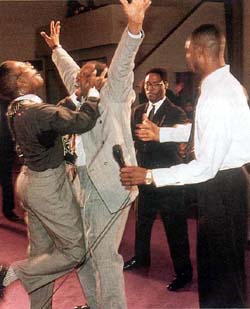 OK, so I won the Father Christmas competition rather convincingly, if you don’t count one reader’s son who sounds like a mini-‘patron god of the Philistines’ in the making.
For the New Year I have another little competition for you.
Many of us theological types often get involved in various prayer meetings over some part of the New Year celebrations, so this game is to calculate who prays at the highest ‘lords per minute’ (l.p.m) level in any of the prayer meetings we attend. The idea is that you count the number of ‘Lords’ said in a typical 15-second clip, and then multiply by four to get a rough idea.
The rules are simple.
- It can be anyone you pray with or even hear, but they must be in the same meeting as yourself.
- You can attempt to record a high ‘Lord per minute’ yourself if you want, but experience tells charismatics tend to clock higher speeds than any theologian, even if they be on steroids or fizzy sticks.
- An interpretation of tongues, yours or another’s that involves the claim: ‘Wow, that was clocking record speeds in the tongues of angels’, doesn’t count.
- Very important is that you try to get along to a really charismatic meeting. I mean really. In other words, if you want a chance of winning, then you need to get along to a foaming mouthed, chandelier swinging, microphone blowing, anointed-jacket swatting, Holy Spirit waving, everybody-laying-hands-on-everybody, ‘I had a picture’ meeting, or you’re lost. I’m telling you, some of these precious brothers and sisters can clock extraordinary high ‘lords per minute’: ‘Lord, we pray, Lord, that, Lord, you’ll save, Lord, the lost, Lord’ etc. Mix that with earnest fervency and you have a potent, unbeatable cocktail (legend has it that in some cases over 60 l.p.m has been clocked).
- Depending on your denomination and role, try steering the prayer meeting with mention of devils, popes, territorial spirits, homosexuals, the lost, whatever gets the most likely high clockers worked up, then grab a calculator.
Being a little charismatically inclined myself, I intend to win this one too (but either way, I will announce the winner in the New Year)
Tuesday, December 26, 2006
A thought about the last two thoughts
 One book that is provoking me to worship like few before is Moltmann’s, The Trinity and the Kingdom – whenever the holy Trinity is the subject of meditation and thought I usually find delighted worship a natural response.
Returning to the theme of atheism, and in the context of a discussion about the Trinity, Moltmann argues:
‘If there were no God, the world as it is would be all right. It is only the desire, the passion, the thirst for God which turns suffering into conscious pain and turns the consciousness of pain into a protest against suffering’ (p. 48, italics suppressed).I like the proposal and I think there is truth here to play with, but I’m actually not so sure the argument as formulated here is entirely watertight.
Not Really a Thought of the Day
Rather unlike the previous, the following snippet of ‘wisdom’ comes from a certain Rev Gerald Ambulance (cf. his Ministry Manual here). This creative minister has been known, for the purpose of enticing people back to church, to spike the church incense with questionable, and in some countries illegal, substances.
Clever.
He was once asked the old chestnut: ‘I’m confused about the Trinity. How can God and Jesus and the Holy Spirit all be God, if there’s only one God?’. He memorably answered:
Clever.
He was once asked the old chestnut: ‘I’m confused about the Trinity. How can God and Jesus and the Holy Spirit all be God, if there’s only one God?’. He memorably answered:
‘Look at it like this: once upon a time there were three little bunnies called Flopsy, Mopsy and Cottontail. One day a nasty man caught them and put them in a rabbit pie. They were still three rabbits, but only one pie’That one smeared a guilty smile across my face.
Thought of the day
Back to blogging today, so I wish all of my readers a belated Happy Christmas!
Rather off topic, but I've been thinking quite a bit about atheism recently; here is a thought I just gleaned from Pannenberg:
Rather off topic, but I've been thinking quite a bit about atheism recently; here is a thought I just gleaned from Pannenberg:
‘So long as faith in God the Creator holds firm, the question of theodicy can be no real threat to it because this faith also carries with it the conviction that God and his counsels are above all creaturely understanding. Only when we deal with the existence of the Creator as a debatable postulate that we have to support by argument does the problem of theodicy carry a weight that can easily tip the scales in favor of atheism’Pannenberg, Systematic theology, vol. 3, p. 634 (Grand Rapids: Eerdmans, 1997)
Thursday, December 21, 2006
The Father Christmas Competition
 Often, us theological types are allowed to speak to children’s groups over the Christmas season, and so I wanted to start a competition. Namely, how many children can you persuade over the next couple of days that Father Christmas doesn’t exist.
The rules:
- Only those who you manage to convince before Christmas Eve count.
- One point per child
- Two points per child if you are able to convince them that Father Christmas is really Beelzebub.
- If you manage to reduce one to tears, then double your score. I.e. if you have three points already, add one for this victory (=4), then double it making eight.
- If you also manage to succeed in getting them to believe the ‘I’m even going to be eating Rudolf the Red-Nose Pie on Christmas day while you’re eating Turkey’ line, add a bonus point.
I’m hoping to top my personal best over the next couple of days but I doubt I’ll manage, as a couple of years ago I had a ‘double your score’ run of three kids in a row, totalling to over 40 points. That was magic.
Tips:
- If you are fat enough, put your name down to act as a shopping mall Santa Claus – and they do tend to trust Reverends.
- Persuade the Sunday school teacher to allow you ‘bible study’ time with the toddlers.
- If you are going for the two-points bonus (see 3 above), don’t bother with the old: ‘See what happens if you rearrange the letters of the name “Santa”’, logic, as it tends to get lost on those of typical target age.
- If you get a job as a shopping mall Santa, when little Johnny is bobbing on your knee, wait till mum has turned her back and pull down your beard, tell him your real name and job, and then expand on the hoax that ‘only babies believe’. If mum turns back overhearing a protest, deny everything. If mum is not around for a few minutes, go for the double your score (4 above - the best way to increase your points). Experience tells that this is facilitated when one tries to mix in the Red-Nose Pie bonus at the same time.
Thus far:
Chris Tilling has accumulated 5 points.
(I’ll add your scores to a league as the results come in)
Cardinal Spin’s Thoughts for the Day
Guest post by Cardinal Spin.
‘Practically everything is false teaching if you look into it enough, so you have to choose your battleground’
This snippet of wisdom comes from my good friend, the Rev Gerald Ambulance (cf. his Ministry Manual here), who has been known for the purpose of enticing people back to church, to spike the church incense with questionable, and in some countries illegal, substances. Clever.
So what is one to do surrounded by such evils as the reading of the NIV bible, and women who are allowed to teach in church? Who is right?
To paraphrase Ambulance, again:
‘For all those millions who have succumbed to various degrees of stupidity, thankfully at least God and I can agree’
Then that makes three of us who can see eye-to-eye.
He is also a clever apologist. For example, he was once asked: ‘I’m confused about the Trinity’, to which he brilliantly answered:
‘Look at it like this: once upon a time there were three little bunnies called Flopsy, Mopsy and Cottontail. One day a nasty man caught them and put them in a rabbit pie. They were still three rabbits, but only one pie’
Wednesday, December 20, 2006
Bauckham responds III
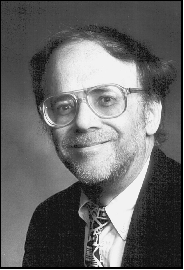 My thanks to Richard Bauckham who has once again taken the time to dialogue with some of the comments, this time those made to part 8 of my summary series on his work, Jesus and the Eyewitnesses (I’m getting rather adept at typing the word ‘eyewitnesses’ quickly these days!). He writes:
“I’m grateful to Richard Fellows for his interesting suggestions, and for directing me to his on-line discussions, which I didn’t know. I haven’t thought much about changes of name, and the topic clearly deserves more attention. I wonder if Richard knows my article on ‘Paul and other Jews with Latin names in the NT’ which has some other ideas about names in it.I would simply add that the article Bauckham mentions, ‘Paul and other Jews with Latin names in the New Testament’, was published in Paul, Luke and the Graeco-Roman world (London: Sheffield Academic Press, 2002), on pages 202-220 to be precise.
To James: My point about the names is not just that they are authentically Palestinian ones, which certainly anyone who had lived in Palestine could have known. It is that, when all the data in the 4 Gospels and Acts is put together, the relative frequency of the various names corresponds closely to what we can calculate from other sources (Josephus, inscriptions, Judean desert scrolls etc). No one could have achieved this by design
Happy Christmas”
I want to also point to C.K. Barrett’s review of this interesting volume in the Journal of Theological Studies, 2005 56(1) pp. 168-170. He had this to say of Bauckham’s contribution in the above mentioned article: ‘Richard Bauckham makes an exhaustive study of Paul and other Jews with Latin names. This contains much interesting information, spiced with a measure of speculation’ (p. 169).
Tuesday, December 19, 2006
Reconciliation – Vertical and Horizontal Dimensions
 A Guest Post by Volker Rabens
Below in the link you’ll find my short article that reviews a fascinating conference on reconciliation held last August in Prague. Chris and I thought that for those of you who have not been able to attend this biennial conference of the Fellowship of European Evangelical Theologians it would be a good idea to make this review available online. In the article you’ll find among other things a summary of high-quality papers like these:
- “Reconciliation in the New Testament: Its Centrality and Relevance”, Prof. I. Howard Marshall (University of Aberdeen, Scotland)
- “Human Reconciliation in the New Testament with Special Reference to Philemon, Colossians and Ephesians”, Prof. Max Turner (London School of Theology, England)
- “Reconciliation and Inter-Church Dialogue in Post-Marxist Societies”, Prof. Johannes Reimer (Unisa, South Africa; GBFE, Germany)
Interested – but not able to read German? Then perhaps you want to read on a bit (or even have a look at the FEET homepage: http://www.feet-europe.net/).
What is FEET? “The Fellowship of European Evangelical Theologians was established almost thirty years ago as the result of an initiative by John Stott. At that time scholarship that combined the highest academic standards with a commitment to the authority of Scripture and to an orthodox, biblical theology was comparatively rare in Continental Europe. Stott saw the need to encourage evangelical biblical scholars and theologians in Europe by providing the kind of network that already existed in the United Kingdom through the Tyndale Fellowship and in North America through the Evangelical Theological Society and the Institute for Biblical Research. [For those of you who have followed Chris’ blog on the ETS, you may be relieved to hear that the FEET does not prescribe the Chicago Declaration. I got the impression at the conference that FEET members are concerned with a “positive”, integrative theology.] Since then an international conference has been held every two years on some specific theological theme.”
The conference in August dealt with both vertical and horizontal aspects of reconciliation. Here are some of the questions that were raised with regard to horizontal reconciliation: “How can the narrow gate of salvation and the wish for a European or global good be integrated? What about the burning questions of what it is to be European and Christian in the West, Centre and East of that Continent, and how are old wounds to be remembered but not glorified? How can we balance even our own personal priorities, how reconcile the parts of ourselves that pull us in different directions?” These and other questions were the focus of a number of papers and lively discussions at the conference.
Well, by now even those of you who don’t read a word of German may want to have a look at the article linked to above, because…it has pictures :-)
Monday, December 18, 2006
Not Short on Humour
I mentioned a few days ago Stephen Tomkins’ little book, A Short History of Christianity. It really is a great read, almost unputdownable. For those who are looking for a quick and readable overview of 2,000 years of church history, you could do a lot worse. Besides, Tomkins is one of the funniest Christian writers alive, which sometimes helps to get through the depressing bits such as the Crusades. For example, when describing the pathetic horrors of the third crusade and the bid of the coalition between Frederick Barbarossa, King Philip and Richard the Lionheart to reach Jerusalem in yet another bloody slaughter he writes:
‘They finally came upon a great river, and Frederick Barbarossa dived in a drowned. His son preserved the royal corpse in a large barrel of vinegar and took him on to fulfil his vow of reaching Jerusalem. The army, unhappy at being led into battle by a pickle, largely went home’!For more of Tomkins comical genius, I highly recommend his Loose Canons column for the Ship of Fools webpage, here. For example, when writing under the heading ‘Boniface: interfaith dialogue wasn't his thing’, he explains: ‘In Germany, Boniface came across a tribe called the Catti, who worshipped an enormous tree in the forest of Geismar, Thor's Oak. He tried to tell them about the cross of Jesus being a much better tree, but they just kept going on about how good their tree was. So he hacked it down’! His description of certain events in the life of the snooping St Aelhaiarn is one of my favourites: ‘Idle curiosity not being commendable, the Lord rustled up a pack of wild beasts, who tore the hapless lackey limb from limb, and bit of limb from bit of limb’. His story can be found here. Also, though not for Fundies nor the easily offended, is his highly irreverent little book, My Ministry Manual by Rev.Gerald Ambulance. Funny as hell, but may also take you there if you laugh too hard.
Saturday, December 16, 2006
Danke Eerdmans
Many thanks to the kind folk at Eerdmans for a review copy of Bauckham’s Jesus and the Eyewitnesses, which gladly arrived in the post today!
*Jumps up and down with glee and does a little break dance*
By the way, Bauckham’s book is evidently selling like wildfire and is the Eerdmans December featured book of the month, as can be seen here.
*Jumps up and down with glee and does a little break dance*
By the way, Bauckham’s book is evidently selling like wildfire and is the Eerdmans December featured book of the month, as can be seen here.
Bauckham’s Jesus and the Eyewitnesses - Part 8
 Click here for the series outline.
Chapter 4. Palestinian Jewish Names
A new resource for study of the Gospels
In this key chapter Bauckham takes a small ‘time out’ from the main thrust of his argumentation in order to pursue an investigation of Palestinian Jewish names in the first century. He does this to inform his approach in the following chapters.
Bauckham’s foundational claim is that, in light of the work of Israeli scholar, Tal Ilan, and her Lexicon of Jewish Names in Late Antiquity: Part I: Palestine 330 BCE - 200 CE (Tübingen: Mohr Siebeck, 2002) names are now a valuable resource for historical study. Indeed, Ilan has collected the names ‘of as many as three thousand Palestinian Jews who lived during the five centuries’ she covers.
However, Bauckham does not uncritically appropriate Ilan’s work, and he differs in his understanding of certain criteria, which Ilan used to generate the statistical calculations. Bauckham’s purpose is primarily to gauge the popularity of each name and so where ‘Ilan counts persons’, Bauckham counts ‘occurrences of a name’. Thus his statistical analysis produces different results in such a way that indicates that a considerably smaller number of names were actually used.
The relative popularity of names
Based upon his foundational claim that the study of Palestinian Jewish names in the first century is of importance, Bauckham proceeds to assert the significance of the fact that ‘there were a small number of very popular names and a large number of rare ones’. Comparing the results of the broader statistical analysis with the names found in the NT, Bauckham can maintain, despite some anomalies, that the statistical results offered concerning the relative popularity of various male and female names is very plausible.
A comparative study of the names of Palestinian Jews in general and those found in the Gospels and Acts leads to an important observation:
[T]he names of Palestinian Jews in the Gospels and Acts coincide very closely with the names of the general population of Jewish Palestine in this period, but not to the names of Jews in the diaspora. In this light it becomes very unlikely that those in the Gospels are late accretions to the traditionsWhy were some names so popular?
The fact that ‘six of the nine most popular male names are those of the Hasmonean family’ indicates that the popularity of certain names is understandable as patriotism in light of Roman rule. Other names were popular because they included, or in some way implied, the divine name. Indeed, many of the names seem to reflect a strong hope for Israel’s restoration and for deliverance from pagan oppressors. While Bauckham does not deny that names do not have to be popular for any specific reason but remain popular simply because they are popular and would, for the sake of family tradition, be repeated from one generation to another, he still suggests that ‘these are secondary factors that do not nullify the rather clear general reasons for the really rather extraordinary popularity of a rather small number of names’. Furthermore, in light of the above reasons Bauckham offers for the popularity of certain names, it may come as a surprise that the most famous Biblical names (Moses, David, Elijah) were not used hardly at all. Bauckham reasons (and the book is filled with fascinating and creative snippets such as this):
It may have been thought that to use these names for one's own children would be a presumptuous expectation that these children were actually the expected eschatological deliverers. So the non-use of these names is itself a kind of negative form of evidence for the messianic hopes of the period.How to tell Simon from Simon

While some of the above may be interesting, it is not as central to Bauckham’s developing argument as what follows. Given that ‘about half the population of Jewish Palestine were called by only about a dozen personal names’, this means that a single name was not sufficient to distinguish one (e.g.) Simon [the most popular male name] from the next Simon. So how did these Jews go about distinguishing people with the same name from each other? Bauckham observes eleven strategies including the use of variant names, the addition or substitution of the patronymic, or husband’s or son’s name, or the use of a nickname, or place of origin, occupation etc. (cf., e.g. Mark 15:40; Luke 24:10; Acts 9:43; 10:7; 21:38).
While this chapter lays some important groundwork for the following chapters, there are some immediate implications. The names found in the Gospels ‘could not possibly have resulted from the accretion of names outside Jewish Palestine, since the pattern of Jewish name usage in the diaspora was very different’. Indeed, given that the gospels evidence typical strategies for distinguishing one person from another with the same name, it would be difficult to explain this data ‘as the result of random invention of names within Palestinian Jewish Christianity, and impossible to explain as the result of such invention outside Jewish Palestine’. Therefore, the authenticity of the names in the Gospel traditions is affirmed, which thus also ‘underlines the plausibility of the suggestion made in chapter 3 as to the significance of many of these names: that they indicate the eyewitness sources of the individual stories in which they occur’.
Friday, December 15, 2006
Küng and Hengel
What a busy last few days! However, a delightful gift came in the post a couple of days ago from none other than the great theologian, Hans Küng! One of the items in the package was a signed copy of the Lew Kopelew Prize ‘order of ceremony’, including speeches (mentioned here). What a lovely surprise!
As I read the speech it became clear that the translation we offered a few days ago on this blog was faulty. Rather than stating that Americans have been misguided ‘by a President arrogantly presenting himself as a Christian’, the German actually says: ‘daß sie von einem arroganten, sich “christlich” präsentierenden Präsidenten ...’ which is, if anything, an even stronger formulation!
Yesterday I was pleased to take part in the 80th birthday celebrations of the great NT scholar, Martin Hengel, in the Tübingen Theologicum. I made a couple of short videos (but as shall become abundantly clear – I will upload them later –, I’m really not film director material!) and managed to get a picture of the back of David deSilva’s head (I’m not paparazzi material either)! The wonderfully friendly, and massively learned, William Horbury gave the honorary lecture in pretty convincing German. Given that I deal with and take issue with Horbury’s thesis concerning early Christology in my doctoral work, it was a delight to hear direct from the ‘horses mouth’, even if I’m still profoundly unconvinced. I’ll blog more about the celebrations later.
By the way, for those who have e-mailed me in the last few days, thank you. I will reply as soon as possible.
Wednesday, December 13, 2006
Bauckham responds II
Prof Richard Bauckham has been reading your comments in my series on his Jesus and the Eyewitnesses again, and he has this to say in response to a strand of criticism that has surfaced a number of times from a certain Mr Carr (cf. e.g. the comments in part 7):“Stephen Carr makes the same point over and over. He accuses me of making mere assertions without proof. He does not understand the nature of my arguments. I am offering historical hypotheses to account for the data. This is a normal part of historical method. Historians do it all the time. We have certain data (in this case some aspects of the text of the Gospels) and we must try to find a hypothesis that adequately explains them (as well as being consistent with all our other relevant historical knowledge). So, for example, why is that, whereas most recipients of Jesus’ healings are unnamed in the Gospels, a few are named. I offer a hypothesis that explains this. I know of no other hypothesis that does. Or why do the names of the women vary at different points in a Gospel or between the Gospels? I offer a hypothesis that explains this.Cf. Bauckham’s first response here.
To ‘prove’ such a hypothesis is a judgment of probability based on how adequately a hypothesis accounts for the data. The way to engage critically with this form of historical argument is (a) negatively, to show that the hypothesis does not account adequately for the data or that it is inconsistent with other known data, (b) positively, to offer another hypothesis that accounts better for the data (or, at least, equally well).
This is the kind of discussion - often at a very sophisticated, nuanced and detailed level - that goes on all the time in NT scholarship, as well as in other fields. NT scholarship differs only in that in many cases the discussion is more intensive and extensive, so that in fact all the possibilities are weighed more rigorously than in some other fields of ancient history where far fewer scholars are at work”.
Tuesday, December 12, 2006
Monday, December 11, 2006
Death Haiku
‘[T]he historical passion of Christ reveals the eternal passion of God ... the self-sacrifice of love is God’s eternal nature’
Jürgen Moltmann, The Trinity and the Kingdom, p. 32
I am absolutely loving this book; I cannot express how much pleasure it is giving me. I’ll stop now before I burst into poetry - and anyone who reads this blog regularly knows that that is not a good idea. This is certainly my favourite Moltmann volume thus far.
Too late, I feel a Haiku bursting out:
----
UPDATE
One reader has pointed out to me that Moses stipulates that a Haiku must mention an aspect of nature.
*Mutters*
So, I’ve written a new ‘death Haiku’, which I’m calling ‘John takes a walk near Dover’ (the first one above I’ve decided to call ‘Ron left his glasses at home’):
With talent like this it is sometimes difficult to remain humble.
Jürgen Moltmann, The Trinity and the Kingdom, p. 32
I am absolutely loving this book; I cannot express how much pleasure it is giving me. I’ll stop now before I burst into poetry - and anyone who reads this blog regularly knows that that is not a good idea. This is certainly my favourite Moltmann volume thus far.
Too late, I feel a Haiku bursting out:
“Shouts: Mind the Bus,Undeniable genius. I’m calling this genre of poetry ‘death Haiku’, to read when listening to your favourite ‘death Christian Rock/hymns’ etc.
Answers: ‘What Bus?’
... Splat”
----
UPDATE
One reader has pointed out to me that Moses stipulates that a Haiku must mention an aspect of nature.
*Mutters*
So, I’ve written a new ‘death Haiku’, which I’m calling ‘John takes a walk near Dover’ (the first one above I’ve decided to call ‘Ron left his glasses at home’):
“John and the cliff edge. Trips.
AWwhhhhhssshhiiiiiiiiittt.
Splat”
With talent like this it is sometimes difficult to remain humble.
Once again Bronstein
Three books
I wanted to share a few spontaneous and simple thoughts on three books that I recently put back on the shelf. While the level of the first two are what could be called ‘popular’, the third is in a league of its own - and in more ways than one.
The first is Peter deRosa’s The fatal flaw of Christianity with the snappy subtitle: He did not rise from the dead and the dogma of Original Sin is pure invention. I know that not everybody likes doing this, but every now and then I get the strong urge to read something that wants to tell me that all I believe and affirm is utter bollocks. Besides, I think it is wisdom to give very different opinions at least a hearing. However, while some of the arguments were insightful, this passionately written book continually sets up a ‘straw man’ Christianity (as many militant Atheists and Fundamentalist Christians do), betrays an appalling lack of balance in the treatment of the evidence, and gets numerous factual issues muddled that first year theological students could correct. Though I’m tempted to write: ‘A useful resource if you’ve run out of loo roll’, as it wasn’t all bad I’ll simply limit myself to: ‘Not the best’.
Much better was Marcus Borg’s, The Heart of Christianity in which the author presents his case for an emerging Christianity over against the traditionalist/fundamentalist vision. I have very mixed feelings about this one. One the one hand, there was much in this easy to read book that helped and inspired me. His ability to perceive truth in the Christian story at various levels beyond the literal-factual was a pleasure to follow, and his gentle and gracious tone throughout encouraged my engagement. He covers a lot of ground but I honestly didn’t ever feel like it was rushed. Always informative and insightful, he focuses upon such issues as love for justice and spirituality, pluralism, panentheism, and the historical Jesus.
Nevertheless, and on the other hand, despite the undoubted strengths of this little volume, I felt it was let down at a few crucial points. While it was all part of Borg’s deliberate argument, I was very uneasy with the relegation of Jesus to what I saw as a ‘nice spiritual metaphor’ for westerners, and was left wondering: if this is how wishy-washy we should be, then why bother. His Jesus simply doesn’t inspire me to radical faith. Arguably his commitment to the distinction between the two ways of Christianity (between the ‘emerging’ and traditional) detailed in his first chapter, has led him to over press the division such that either one is all in one model, or all in the other. Besides, I’m pretty sure many ‘emerging Christians’ I know would argue this use of ‘emerging’ language is a dubious piece of PR. I personally prefer to take some things from his own particular spin on the emerging model, and leave the rest. I don’t think that all in traditional Christianity is as desperately in need of the particular radical overhaul he proposes. Among other things, it leaves any serious kind of need or motivation for cross-cultural mission hanging in thin air. And that, for me, just isn’t acceptable. In this respect, when any book refers favourably to Paul Knitter’s No Other Name? in the footnotes, as this one does, then it quickly receives a large dose of my immediate suspicion. I think my feelings about this book are clear: I found it a real mixed bag.
The third book is the exceptional Colossians Remixed: Subverting the Empire, by Brian J. Walsh and Sylvia C. Keesmaat. I’ll probably post on this book in more depth another time, but I will simply record now that this is one of the most challenging, inspiring and enlightening books I’ve read in a very long time. It is essentially an exercise in a particular hermeneutical reading of Colossians, one informed by a study of post-modern culture (which admittedly not all will like). The results they suggest are worthy of serious consideration, and I hope this book does provoke healthy debate, even if, in the process, some of the details of their hermeneutical approach and moral vision are Tim LaHayed (left behind). You’ll certainly never read Colossians the same way again! Click here for the table of contents and sample text (the preface and first chapter).
Sunday, December 10, 2006
To Bronstein's memory
 Hardly a theologically or biblically related post, but some readers may be interested.
Sadly, a few days ago, David Bronstein, the great chess Grandmaster died. Born in Ukraine, 1924, he dazzled the world with spectacularly creative chess. I remember playing through some of his games for the first time and decided to give up trying to understand the mathematics of the combinations, and instead let myself simply enjoy the aesthetics and colossal imagination they demonstrated! The ICC had this to say about him:
‘Bronstein was a truly original thinker, creative genius and master of tactics who believed the game to be more art than science or calculation – for him, the aesthetics was always more important than the result’One of the most enjoyable chess books I have ever read is the second part of Kasparov’s My Great Predecessors series (my copy is signed by the great man himself!). Kasparov summed up Bronstein’s unmistakable style with the words: ‘For the sake of brilliance it is worth taking a risk!’ (191).
In honour of this great chess artist I have uploaded two of his notable victories.
Click here for his 1946 game (as Black) against Zita. You will be taken to a java board to follow the moves on a chessboard.
The second is a simply breathtaking game to which I have added a few notes – no detailed analysis, just a spattering of thoughts along with a few of Kasparov’s comments from his above mentioned book. Click here for this beautiful victory over the great Keres.
Bronstein, may you rest in peace.
----
By the way, if anyone is interested in starting chess as a hobby, here is some essential information for you. Essential.
Thursday, December 07, 2006
Hans Küng receives the Lew Kopelew Prize!
 I’m happy to inform the biblioblogging community that Tübingen based Theologian, Hans Küng, received the Lew Kopelew Prize for Peace and Human Rights last Sunday, for his ‘unermüdlichen Einsatz um ein besseres Verständnis zwischen den grossen Religionen der Welt’. It was a real joy to watch the whole presentation on TV. As to his speech, I was both surprised and pleased how bold and forthright he was in his criticisms of the Bush administration. For example, in the context of peace among the world religions, he courageously claimed that he:
‘considers it a positive development, at least since the loss of the congress elections in Nov 2006, and the long over due outing of the incompetent and warmongering defence minister, that most of the American citizens are slowly coming to realise – one has to say this clearly – that they have been misguided, yes misguided, by a President arrogantly presenting himself as a Christian, by a neo-conservative ideologist, and by a passive congress as well as willing mass media’ (translation ours).Earlier he spoke that (our translation shortens the original German considerably):
‘Instead of effectively fighting a criminal network, this president thought he had to announce a war, marching into Afghanistan and, despite his father’s wisdom, into Baghdad, thereby turning his father’s idea of “the new world order” into a “new world disorder”!Küng has never been one to duck a fight, at least one in the service of peace and human rights!
By the way, I hope the person from New Jersey, United States, found what he or she was looking for when their Google search for ‘The Biblical Significance of a Sneeze’ landed on my blog! Why oh why would anybody want to search Google for that?!
Wednesday, December 06, 2006
Something is stuck in my New Perspective Piper
 I had a sizeable number of visitors today from a Christian blog (Between Two Worlds by Justin Taylor) that, to judge from the sidebar links, is a tad more conservative than mine. Still, I not only enjoyed skimming through the highly recommended contents, but also landed on a link to a recent John Piper article on ‘Jesus, Islam, Pharisees, and the New Perspective on Paul’. Though ‘Pastor John’ is undoubtedly more conservative in many of his theological judgments than I, I have learnt much from him - especially from his book The Pleasures of God, which really helped me to think through and enjoy the glory of the Father’s delight in his Son in a profoundly moving way.
In the above article Piper takes a few shots at the Pauline New Perspective – some of which land on target, while others, in my opinion, are a little muddled – as also is the implied parallelism in overall theme (cf. the final paragraph of his article). To pick up on one of the potential problems, he argues against Wright’s stab at the caricature of 1st century Judaism as ‘self-help moralism’ with the claim that:
‘People don’t go to hell for “keeping the law out of gratitude” as a “proper response to grace.” People go to hell for relying on themselves instead of grace’.In other words, Jews weren’t ‘covenantal nomists’ relying on gracious election into the covenant as the basis for law-obedience, but were rather trying to earn their salvation and were hence in danger of hell. Not only is this, in my opinion, a category muddle, I would suggest that Piper is anachronistically reading back later concerns and dogmatic considerations back into the Gospel texts (and Paul) that are concerned with paralleled yet not equivalent problems. A historical study of the real problems at stake, as evident in the narratives that shaped first century Jewish (and early Christian) identity, I think makes this clear. This is another way of saying that the process of contextualisation is such an important moment in exegesis, as it guards against eisegesis.
To put it more poetically, and to mimic George Tyrrell (no, not Schweitzer - that is a myth of Bultmannian proportions):
I should have been a poet - that is bloody genius. Yes, admittedly, this picture springs oh so easily to my mind given my long, painful night, a couple of days ago, puking into the ‘big white telephone’. But that is beside the point.‘We have to be so careful, when peering into the puddle of water at the bottom of the u-bend of history, that we don’t allow ourselves to get enamoured with our own reflection, however turd-ridden the waters be’.
By the way, don’t know what a turd is? Discover all here (the third definition in particular wrinkled my face into a smile).
Bauckham’s Jesus and the Eyewitnesses - Part 7
 Click here for the series outline.
Chapter 3. Names in the Gospel Traditions
In the following I briefly summarise the general argument Bauckham employs in justification of his case as detailed in the previous post. His focus concerns the significance of the naming of i) the women at the cross and the tomb, ii) Simon of Cyrene and his sons and iii) certain recipients of Jesus’ healing miracles.
i) In all the Synoptic Gospels the role of women as eyewitnesses is, as Bauckham notes, crucial: ‘they see Jesus die, they see his body being laid in the tomb, they find the tomb empty’ (Here I must refer to Bauckham’s excellent work, Gospel women: studies of the named women in the gospels [Grand Rapids, Mich. : Eerdmans, 2002]. Click here for more information on the Eerdmans website, with access to a free excerpt – the whole introduction!). A comparison of the difference in variation of names of the women mentioned in the Synoptic Gospels could suggest that the writers were not interested in historical accuracy at this point. However, Bauckham insists that the variations are evidence of ‘the scrupulous care with which the Gospels present the women as witnesses’. The Gospel writers were careful only to name those who were known as eyewitnesses of specific events, even when this left the edges of the narrative unpolished. Furthermore, these women arguably remained prominent in the early church and were associated with the transmission of these traditions.
ii) While readers of Mark would naturally assume that the Twelve disciples were the major sources of the traditions within the Gospel, when they vanish from the narrative (at 14:72) the reader is left wondering who the witnesses to these events were until the mention of the women in 15:40. Who, then, witnessed the events in 15:1-15:39? Enter Simon of Cyrene. The only variation in the Synoptics is that Mark names his two sons, while Matthew and Luke omit them. Bauckham argues that Mark cites them as he appeals to Simon’s eyewitness testimony not first-hand but through his sons. And they were named as they remained well-known figures in the early church and could be asked about the events themselves, whereas by the time of Matthew’s and Luke’s Gospel, they were no longer available or well known.
iii) The recipients of Jesus’ healings were not often named so appeal to genre cannot explain why some were named in specific stories. To take an example:
‘In the cases of Jairus, whose name is dropped by Matthew, and Bartimaeus, whose name is dropped by both Matthew and Luke, we encounter once again the phenomenon of a character who must have been named by Mark because he was well-known in the early Christian movement but whose name was dropped by one or both of the later Synoptic evangelists, presumably because at the time at which they wrote or in the part of the Christian movement with which they were most familiar this figure was not well-known’This alleged eyewitness function of the recipients of Jesus’ healings is also suggested by the words of Quadratus (Eusebius, Hist. Eccl. 4.3.2), who reminisces about a time in his life ‘of which it could credibly be said that some people healed by Jesus were still alive’.
Finally, and displaying the fair and honest judgment that typifies Bauckham’s handling of matters throughout the book, he notes that while the existence of vivid detail within a story is not strictly evidence for or against it be reflective of an eyewitness retelling, ‘it is at least interesting that some of the stories we have suggested come from those who are named in them are among the most vividly told’.
(Artwork via https://www.scholarsresource.com/browse/work/258952936)
Tuesday, December 05, 2006
Chris Caragounis on NT Greek
 What a horrible frigging last day. I tell you, these evil German ‘tummy bugs’ don’t take prisoners; they mercilessly cause you to throw up for the whole night long – literally –, and then wake you up for the next day with the mother of all headaches, and a fever so malicious you could fry eggs on your cheeks.
Thank God that I’m feeling a bit better now.
Anyway, enough self-pity; time for good news. Some of you may remember that I posted about Chrys Caragounis’ excellent and important work, The Development of Greek and the New Testament. Morphology, Syntax, Phonology, and Textual Transmission, last January. The work generated some surprisingly strong debate with Moses Silva, yet Chrys has helpfully detailed the dispute and uploaded his response on his webpage, here.
Chrys e-mailed about a week ago to happily inform me that Baker Academic is about to publish a considerably more affordable paperback edition. It should appear around Christmas 2006.
For more information with endorsements of the book, click here. I for one wish Chrys much success with this deeply insightful and learned work.
Monday, December 04, 2006
Bauckham responds
Time for the promised e-mail comments from Professor Richard Bauckham in response to certain criticisms.  As I mentioned under point two of the previous post, Richard naturally doesn’t have the time to get muddled into all of the debates and questions in the comments of my posts on his work, Jesus and the Eyewitnesses (cf. here for the series outline). I am very grateful that he nevertheless wanted to dash off a few thoughts in relation to some of the criticisms, posted in the comments in parts 4 and 5 of my review, directed against his understanding of the significance of the Papias evidence. Do have a look at those posts and the following discussion, and enjoy Richard’s comments below:
Indeed! I would add that I think this is all the more the case for those who seem - as far as I see it - to be finding Richard’s arguments somehow threatening.
As I mentioned under point two of the previous post, Richard naturally doesn’t have the time to get muddled into all of the debates and questions in the comments of my posts on his work, Jesus and the Eyewitnesses (cf. here for the series outline). I am very grateful that he nevertheless wanted to dash off a few thoughts in relation to some of the criticisms, posted in the comments in parts 4 and 5 of my review, directed against his understanding of the significance of the Papias evidence. Do have a look at those posts and the following discussion, and enjoy Richard’s comments below:“(1) Papias wrote 5 books of Gospel traditions with commentary. Why do writers who knew Papias quote so few of these traditions? Because most of them paralleled material in the canonical Gospels and they had no interest in quoting such material. For them, the canonical Gospels were a better source of this material, so why bother with Papias? What they quoted was interesting, otherwise unknown or otherwise paralleled only in apocryphal sources, material. I know no better explanation of why we have so few quotations from Papias’s book.At the end of his e-mail Richard made a point that I’ve been stressing throughout: ‘In general, this kind of criticism is much more worthwhile from someone who’s read the chapter itself, rather than just your summary (good as it is)’.
(2) Eusebius was highly prejudiced against Papias. The ‘strange parables’ is his evaluation of them. Especially if they were ‘millenarian’ in character he would have thought them worthless.
(3) I do not think Papias knew the Gospel of the Hebrews. Rather the story he told about the woman accused of many sins is a story that Eusebius knew in the Gospel of the Hebrews. Eusebius is interested in tracing references to use of canonical and noncanonical scriptures in the early period. I think if Papias clearly referred to the Gospel of the Hebrews we would expect Eusebius to make this clearer.
(4) However, supposing Papias did make use of the Gospel of the Hebrews, I don’t see any particular problem in this. We have very few fragments of this Gospel and so it’s very difficult to make judgments about it. But it may have contained lots of authentic traditions. Why not? I’m not in the business of claiming that the canonical Gospels were the only Gospels preserving good early traditions about Jesus. Why should Carr think I am? Because he casts me (without reading the book) in some kind of fundamentalist role.
(5) Doubtless the tradition about the death of Judas is legendary. I expect most oral history includes some legendary material along with good reminiscences. I’ve no problem with this.
(6) The story about Justus Barsabbas may be true. Who knows? It appears to be related to the Longer Ending of Mark.
(7) To say that Papias thought of himself as a historian and knew what good historical practice was supposed to be, is not necessarily to say he was particularly good at implementing such practice. I do not claim he was and it’s not the point I was interested in. We have far too little of his work to be able to judge the matter, I think, given that the quotations we have from him are likely (for reasons stated above) to be unrepresentative of his work as a whole. But there were plenty of historians in the ancient world who knew what good historical practice was supposed to be but didn’t practise it very well”.
Indeed! I would add that I think this is all the more the case for those who seem - as far as I see it - to be finding Richard’s arguments somehow threatening.
Subscribe to:
Posts (Atom)


