Tuesday, February 03, 2009

Rethinking scripture

Our extremely well read friend, Dan, has written a thought-provoking post on how he understands scripture here.

Here are four more random thoughts, unrelated to Dan's post, on rethinking the doctrine of scripture:

  1. It should recognise the significance of the ecclesial womb in which the canon grew – thus also the correct principles of interpretation (the rule of faith)
  2. It needs to recognise that modern forms of academic discourse may not be the most appropriate contexts in which to banter, with intellectual integrity, the term 'inerrancy'; the phenomena of the text must shape such debate rather than external deductive wringers (i.e. 'inspired by God' + 'God never lies' = inerrancy) .
  3. That said, speech about the biblical texts in ecclesial and doxological contexts should not have to be as restrained, detached and coy in its dogmatic formulations (perhaps talk of inerrancy is more appropriate here, so long as it does not consistently breach the eschatological limitations on any claims about truth – cf. 1 Cor. 13:12)
  4. The task of bridging the academic and ecclesial contexts can perhaps best proceed by negotiating a relational ontology in defining the inspiration of scripture, one which reframes the truthfulness of scripture in terms of our communal and personal stance towards the texts and our daily practices.

Wednesday, January 28, 2009

A huge thanks!

To Jim West for kindly sending me a copy of Bultmann's commentary on the Gospel of John!

Fantastic! Bye bye the borrowing of library copies! By the way, new does not necessarily mean better in the world of bible commentaries. Bultmann's commentary on John is widely considered a real classic.

I recently heard Rowan Williams say that 2 Corinthians is closest, of Paul's letters, to the theology of John's Gospel. Indeed! It is not an accident that Bultmann wrote a stonking commentary on 2 Corinthians, perhaps his very best.

All this means of course: I ought to say something nice about Zwingli today.

'I suppose Zwingli gave it his best shot, bless him'

There ya go.

Another memorable theological proposition

OK, so I'm stretching the genre of this series to include the following!

'[T]he original gospel message was about the temple, not the corrupted temple of Jesus' own time, but the original temple which had been destroyed some six hundred years earlier ... The Book of Revelation is the key to understanding early Christianity ... Melchizedek represented the older faith ... Jesus as Melchizedek can now be seen as the key to the New testament'

Margaret Barker, Temple Theology: An Introduction, pp. 1, 4-5

Just a thought: Barker often writes interchangeably of the 'mindmap' of the temple and the 'worldview' of the early Christians, as if they were essentially synonymous. However, is a mindmap, while it may be part of a worldview, sufficient to form a worldview itself (especially as I suspect Barker's temple theology tends to neglect a necessary focus on the crucial matter of 'story' in constructing worldviews)?

Guest Book Review by David M. Moffitt

My thanks to Brill for a review copy of Hebrews: Contemporary Methods—New Insights. BINS 75. Edited by Gabriella Gelardini. Leiden: Brill, 2005. Thanks also to David for another insightful review. Again, before I hand over I should note that the Greek font used is SPIonic.

------

The general trend to read the texts of the New Testament as works that belong within the pale of Second Temple Jewish literature, and thus more and more against the background of a Jewish milieu, has largely left the subset of Hebrews scholarship unaffected. I have no wish in this brief review to impose a reductionistic dichotomy between Judaism and Hellenism. Nevertheless, to paint with a broad brush, it seems to me that the world of Hebrews scholarship has remained happy to assume that, if any New Testament text can be considered pervasively influenced by Greco-Roman philosophy, rhetoric, and culture—surely this is it. Hebrews, many believe, represents a kind of Philo-like fusion between early Palestinian Jewish proclamation about Jesus and the bigger world of the Hellenized diaspora. As a result, a great number of assumptions about the cosmology, Christology, soteriology, and eschatology of the document have largely remained insulated from the sea change going on in the rest of the New Testament canon. Hebrews: Contemporary Methods—New Insights (now available in an affordable paperback edition) is one of a handful of recent publications containing hints suggesting that even the inlet of Hebrews studies is starting to be affected by the turning of the tide.

I cannot here detail all the essays in this volume. For a more thorough survey of the contents of the book see that of C. Patrick Gray in RBL: http://www.bookreviews.org/bookdetail.asp?TitleId=4895&CodePage=3292,2272,4895,2150,1059,6070,6966,5102,5445,5732. Instead, I will highlight two essays illustrative of what I consider to be some of the book's contributions vis-à-vis the kind of change alluded to above.

The volume's very first essay by Ekkehard and Wolfgang Stegemann is entitled "Does the Cultic Language in Hebrews Represent Sacrificial Metaphors? Reflections on Some Basic Problems" (pp. 13–23). In this piece the brothers Stegemann helpfully remind us that, "[D]ue to our epistemological paradigm, the sacrifice of Christ can a priori be ruled out as a potential historical referent [for the language of Jesus' heavenly offering], since from the perspective of our worldview heaven is no place for historical events" (p. 15). In other words, our modern worldview makes it easy for us to assume that the use of cultic and heavenly language in Hebrews to describe Jesus' salvific work "must be theological and metaphorical" (p. 17). The Stegemanns carefully note that they are not offering a detailed discussion of theories of metaphor (p. 14). Rather, they wish to point out to us that Hebrews scholarship has often used the language of metaphor in opposition to that of real, historical, objective representation. There is what actually happened (Jesus was crucified), and there is the metaphorical language of sacrifice and heaven used by the author to create the spiritual/existential significance of the earthly event. All of this looks like the sort of thing we might expect from a good Platonist after all.

The Stegemanns' essay is more a word of caution than a constructive proposal for how we should then read Hebrews. Yet, their brief word of exhortation offers us an opportunity to demythologize some of our own assumptions. What if, for example, the author of Hebrews does not imagine himself as interpreting the real, earthly event of Jesus' death by way of appeal to a spiritualization of the cultic practices depicted in Jewish scripture? What if he is not speaking in terms of metaphors (where the language of "metaphor" is understood along the reductionistic lines that the Stegemanns, rightly in my view, think many scholars intend when they use it)? What if, as those at Qumran seem to have thought, the author believes that there really exists a heavenly tabernacle (that Moses really saw), that there really is a heavenly liturgy and throne, and that Jesus really went to that place? It is not clear that a relatively orthodox Platonist would think this way, though a Jew with apocalyptic leanings just might. The Stegemanns do not develop their point in this direction. It seems to me, however, that their critique of our implicit assumptions at least provides a little space for us to try to reimagine the message of the homily along the lines of Jews who read their scriptures more like the apocalyptic writers than like Philo.

The second essay I want to highlight is that of Christian Eberhart entitled "Characteristics of Sacrificial Metaphors in Hebrews" (pp. 37–64). As the title suggests, Eberhart approaches the depiction of Jesus' death in Hebrews in terms of a metaphorical appeal to the sacrificial system. Yet, relying largely on his own massive research into Hebrew sacrificial practices, he encourages us to take the biblical accounts of sacrifice more seriously in order to clarify what the content of a metaphorical appeal to those practices might be. The first half of his essay provides readers with a concise summary of his own work and the backdrop against which it stands. One of his claims is that the Jewish scriptures do not identify the climax of a sacrificial act with the slaughter of the victim (p. 49). Rather, the offering, i.e., the bringing of the sacrificial blood (or other materials) into the presence of God, is where the effectual benefits of the act are obtained. Referring to the purifying/atoning results of blood sacrifices, Eberhart points out, "[T]his purification would not happen if the animal of, e.g., a sin offering were to be slaughtered without the subsequent blood application rite being carried out" (p. 58). In such cases the death of the victim is a sine qua non for the blood rite, but "the moment of slaughter as such … has no particular significance" (ibid.). One of the interpretive payoffs for Eberhart is that the references in Hebrews to Jesus' blood can be more clearly understood as emphasizing Jesus' death as the prerequisite for salvation. The term "sacrifice" can then be seen as referring to more than just the crucifixion. That is, in keeping with Hebrews' own logic, the sacrifice of Jesus should be seen to be inclusive of his death and "transition from earth to heaven where he now serves as the heavenly high priest" (p. 64).

As an exercise in pushing us to think seriously about the ways sacrifice probably worked, or at least is depicted in the Jewish scriptures, Eberhart does us a great service and helps us begin to think through the Jewish milieu of Hebrews afresh. It is not uncommon for interpreters to conceive of Hebrews as an attempt to map the death and ascension of Jesus onto the two supposedly great moments of Yom Kippur—the slaughter/death of the victim and the offering of its blood. The work of Eberhart, however, challenges this conception of Yom Kippur. There was only one great moment—the presentation of the blood. In light of Eberhart's work, I find it interesting that the preferred verb for Jesus' priestly action in Hebrews is prosfe/rw (prospherō – meaning "to offer, present") and never qusia/zw (thusiazō – meaning "to sacrifice"). Eberhart, unfortunately in my view, translates the verb prosfe/rw with the gloss "sacrifice." Let me be clear that this is probably more an issue of English rendering than the Greek per se, but if the emphasis in Yom Kippur really does fall on the presentation of the sacrifice (where "sacrifice" is a noun) and not the act of slaughter, then it seems more accurate to bring prosfe/rw into English as "to offer/present," than as "to sacrifice." To sacrifice (especially oneself) in contemporary English parlance calls to mind an act that brings about death and connotes all kinds of things that may actually muddy the point being made by the author of Hebrews (and brings too much of Paul into Hebrews to boot). Some translations are more careful about this (e.g., the RSV), though some, like the NIV, prefer to gloss prosfe/rw as "to sacrifice" and thereby leave English readers with the impression that Jesus sacrifices himself in Hebrews. In fact, Jesus always offers himself to God (i.e., he is never the subject of the verb qusia/zw in Hebrews), and, interestingly, when the author speaks explicitly about where this occurred, he locates it in heaven.

I realize I may be accused of hair splitting (and that many will likely want to challenge some of my previous comments by pointing to passages like 10:5-10), but, while the semantic domains of these two Greek words overlap to a high degree in cultic contexts, the very evidence Eberhart deduces about the high point of blood sacrifices being the presentation of the blood before God may suggest that the author of Hebrews is more careful in thinking through the relationship between Jesus' death and Jesus' ascension/priestly activity in heaven and Yom Kippur than is generally assumed. In keeping with my comments above, perhaps we ought to take Hebrews' language of Jesus' offering himself, his body, and his blood, which incidentally is the agent of life in Leviticus, not death (a point that Eberhart notes; cf. another essay in the volume, that of Ina Willi-Plein, "Some Remarks on Hebrews form the Viewpoint of Old Testament Exegesis," [pp. 25-35, esp. 33]), in heaven more seriously. Perhaps, that is, what Jesus does in heaven is, very much in keeping with the biblical account of Yom Kippur, far more important for atonement in Hebrews than the crucifixion.

Space already fails me to say more. My own views on the points I raise above are being hashed out in my dissertation (a very brief abstract may be viewed here: http://www.duke.edu/~dmm20/Dissertation.html). Suffice it to say that Gelardini has compiled a volume of interesting and engaging essays, and I am grateful to Brill for publishing it. I recommend this book to anyone interested in learning more about some of the current issues being debated in Hebrews scholarship.

David M. Moffitt

Friday, January 23, 2009

Guest book review: Misquoting Truth

My thanks both to IVP for a copy of Timothy Paul Jones's Misquoting Truth. A Guide to the Fallacies of Bart Ehrman's Misquoting Jesus and to Samuel Ciszuk for his review.

With the basic teachings of Christianity more or less constantly under fire and its demise proclaimed by a multitude of experts for what seems to be a host of different reasons for decades –at least here in the West, one should by now have expected inflation in the appeal of books proclaiming the end of Christianity being nigh. Perhaps at least one should expect people in general and Christians in particular to have become blasé by alarmism and approach their critics a bit more sceptically and patiently. Not so, it seems, as those attacking the validity of Christianity's basic tenets still seem to have a huge opportunity to impact believers', who allow their doubts to be fed and the carpet of trust in the basic tenets of their faith being pulled from underneath them, while not applying at least the same level of questioning against the critics themselves as they apply to their own faith.

One who did not panic when faced with serious questions, but paused for thought and then wrote a book to answer some of the latest claims of fallacy levied against the New Testament (NT), is Timothy Paul Jones, who in his "Misquoting Truth, A Guide to the Fallacies of Bart Ehrman's Misquoting Jesus" (2007, IVP Books), gives a strong defence against claims from a fellow textual criticism scholar, Bart Ehrman. Ehrman claims that so many mistakes have entered the NT and so many different versions have been put together, that the NT of today has very little in common with what the eyewitnesses of Jesus and the apostles originally wrote. His book "Misquoting Jesus", made discussions within the highly technical field of textual criticism accessible to lay readers, explaining much of the field's intricacies, while forcefully putting forth his revisionist thesis about the validity of the NT and his –to the lay reader often shocking claim- that "there are more differences among our manuscripts than there are words in the NT". Because of Ehrman's accessibility, his book became something as rare for a textual criticism tome as a bestseller, thereby taking the place as perhaps the only book on the subject read by many a believer -struggling to deal with the book's message- or indeed un-believers, inoculating them safely from coming to view the Bible as any reliable source of truth and authority. Jones' "Misquoting Truth" therefore fills a deeply needed void, in that it continues on Ehrman's path in making textual criticism even more accessible to readers without formal theological schooling, while systematically addressing the allegations of textual fallacy raised by Ehrman.

Jones does not spare energy on gracefully meeting Ehrman's contentions head on, chapter by chapter allowing Ehrman to speak for himself through numerous and often lengthy quotations, before attempting to paint a picture of what actually more-or-less is the broad consensus among scholars and going through the evidence which testifies against Ehrman's claims. Jones goes through the facts surrounding the original NT manuscripts in chapter 1, placing them into their historical context and also explaining how they were handled in the early church. In chapter 2 he delves into an assessment of the copyists, who copied and preserved the original texts, describing their stringent standards and meeting Ehrman's questioning of their abilities. In chapter 3 Jones meets Ehrman's criticism about the truthfulness of the Gospel full on, exposing the flaws in his reasoning and laying bare the facts which actually are widely agreed upon within the international body of NT contextual criticism scholars. First in chapter 4 does Jones takes his argument further, from defending the NT against Ehrman's charge and into scrutinising Ehrman's questions themselves, demonstrating how they seem bourn out of a will to find fault with the Gospel, rather then out of a fair will do research eventual textual discrepancies. In the second part of the book, Jones outlines and introduces the concept of oral history, the Gospels' authors, the concept of historical eyewitness testimony and how the books now forming the NT were originally chosen, in their respective chapters, informing and educating the reader, while continuing to undermine the basis for the relevance of Bart Ehrman's questions. The book is finally tied up with some more personal remarks from the author, tying his personal journey through theology and contextual criticism in with Bart Ehrman's and reflecting on their respective different outcomes.

Throughout the book, Jones meets Ehrman's charges of fallacy against the NT in a highly gracious way. Perhaps he is even too gracious, given how successfully he appears to not only defend the NT, but also expose Ehrman's questions as being the wrong questions -posed out of an initial will to discredit the relevance of the Gospel, and therefore exploiting a lack of detailed knowledge among readers in order to seem relevant, rather then to base them on anything even remotely close to objectively defined problems.

While successfully meeting a large swathe of charges against the validity and trustworthiness of the NT, the book is also a wonderfully easy and concise introduction to the history, background and treatment of the Gospels, as well as the field of contextual criticism. It is full of "fact sheets" and "know more"-boxes, for everyone needing to get a quick background on everything from parchment, to characters like Marcion of Sionpe. The will to make all jargon and terms understandable to all is perhaps taken too far occasionally, slowing down the narrative somewhat. Also, I might have found the narrative a little bit too personal and chatty at times, although that arguably is a question of taste. While, luckily, not all of us have struggled with these issues, I would clearly recommend the book to everyone. Not having given these issues any particular attention, I was rapidly drawn in by the book and it is my firm belief that any reader's respect for the Gospel and for the early Christians will be strengthened by it.

Thursday, January 22, 2009

Another memorable theological proposition

"Emmaus never happened. Emmaus always happens"

James Dominic Crossan on Luke 24:13-32 in Jesus: A Revolutionary Biography.

Again, I'm not saying it is agreeable, simply memorable!

Sunday, January 18, 2009

Guest Book Review: Martin Hengel's Die vier Evangelien

My thanks to Dr Thomas Scott Caulley, of Tübingen's Institut zur Erforschung des Urchristentums, for the following superb review of Martin Hengel's, Die vier Evangelien und das eine Evangelium von Jesus Christus, WUNT 224, Tübingen: Mohr/Siebeck, 2008. Before I hand over to Scott, I would point out that the Greek font used in the review is SPIonic, which can be downloaded here.

This work is an expansion of Hengel's book, The Four Gospels and the One Gospel of Jesus Christ (SCM/TPI, 2000). The new volume is a re-working of the Vorlage from which The Four Gospels was translated, "um über 40 prozent auf den jetzigen Umfang". Both volumes are dedicated to Hengel's long-time translator and friend, John Bowden, who translated The Four Gospels. Some of this material has roots in Hengel's earlier work, including on the Gospel titles and John's Gospel.

While Hengel engages with the latest scholarship, this book is more than just an updating of the literature. The new section VII.2, "Die 'Minor Agreements' zwischen Lukas and Matthäus gegen Markus", is significant. The previous section VII.1 ("Das Rätsel 'Q'") includes changes which transition to the new material. On the other hand, most of the additions are supplemental to the overall argument, which remains unchanged.

Hengel begins with a two-part problem: (1) What is the relationship between the early Christian understanding of "Gospel" as the preached message (Paul); to the written "biographical" reports of the four Gospels, and how can both of these represent the same title ("Gospel")? (2) How is it that we possess these written "Gospels" in a four-fold form, which though canonical, presents us with several contradictions? He restates the problem in two overlapping questions: (A) "What was the 'Gospel' originally, as the message of salvation? Was it accounts of Jesus from his closest followers, or was it teaching about him as "christology" and "soteriology"? Or is this only an apparent contradiction? Must not the Gospel have necessarily contained both from the beginning? (B) Why, and from what time have we had the "Gospel" also as story (Erzählung), and indeed in such different literary forms?

Hengel's answer to these questions leads to the conclusion that the gospel was both "proclamation" and "story". He points to proclamation in 1 Corinthians 15:1-11, but notes that "story" was not totally absent in Paul. The "narrated Gospel" is most important in the case of Peter, whom Hengel believes stands firmly behind Mark's Gospel. Finally, Hengel compares the Gospel to the Torah, two examples of the "Erzählung des Heilsgeschehens".

Hengel defends a traditional "slow-growth" theory of the development of the four-Gospel collection, against recent attempts to redefine that development as "punctiliar" (variously, T. Heckel; D. Trobisch). He faults H. Gamble (Books and Readers) among others for perpetuating the old assumption that the Gospels were circulated as anonymous documents—Hengel thinks the titles were necessarily present once the Gospels began circulating. "Jedes schriftliche Evangelium braucht den Nachweis der Autorität, die dahinter steht". The reception of Mark's Gospel in Rome, the congregation which emerged as de facto leader of the Christian west after the destruction of Jerusalem and Neronian persecution, marks the transition from the use of the term "Gospel" as preached message to written document.

Hengel's detailed account of the first Christian "book cupboards" is integral to his argument. As book titles met the needs of the libraries, scriptoria and book shops of hellenism, the titles of the Gospels were functional necessities in the church from early on. Hengel notes what others have pointed out, namely that in the manner of ascription, the titles of the Gospels break with convention found throughout the hellenistic world. This usual form is the genitive of the author's name, followed by the title of the work. Indeed, this conventional form is used with the Catholic epistles (Pe/trou e)pistolh/ A). The apparently unprecedented Kata\ Ma/rkon, etc. as ascriptive title is a shortened form, presupposing the collection title, "The Gospel(s)". The short titles within the collection should thus be rendered: "(The Gospel) in the version according to Mark", or "Luke", etc. But since "der eigentliche 'Autor' des einen Evangeliums war Jesus Christus selbst", the ascription to the "human author" in the genitive is inappropriate, and we find instead in Mark 1:1, "The beginning of the Gospel of Jesus Christ". Thus, the title of the work cannot read simply "Ma/rkou eu)agge/lion", as convention would dictate, and the double genitive Ma/rkou eu)agge/lion )Ihsou~ Xristou~ would be stylistically very awkward.

Hengel argues for the priority of Luke over Matthew. He sees in the Lukanischen Doppelwerk the work of a "direct" Paulusschüler as well as Pauline companion. Acts cannot have been written a long time after Paul. Where would an anonymous 2nd century author have acquired the historical details in Acts which are largely confirmed by a comparison to Paul's epistles? The "We" sections in Acts are not from an unknown source, but are autobiographical reports in the same style as the entire work. Citing Luke's Passion narrative with Jesus' admonition about the coming catastrophe (Lk 23:28-31), Hengel asserts that the author of Luke must have experienced those days, after which he also was involved in the disputes with fanatical Christians over the imminent expectation of the Parousia.

In the last part of the work Hengel outlines his case that Matthew is the latest of the Synoptics, and dependent upon both Mark and Luke. In general, Matthew reflects the Jewish War only where he inherits the material from Mark. On the other hand, like John Matthew reflects the later development of the Christian argument with the Synagogue that emerged as stronger after the war. Matthew presupposes the post-70 emergence of the Pharisaic Scribe as preeminent religious authority in Palestine, a situation reflected throughout the Gospel, but especially in Matthew 23 (the hendiadys "Scribes and Pharisees", and Matthew's special material "The Scribes and the Pharisees sit on Moses' seat; so do what they say, but not what they do..."). The trinitarian formula of Matt 28:19 suggests a relatively late time of writing. Finally, next to John's Gospel Matthew presupposes the furthest development of the polemic between Jews and Christians. Hengel adds a section here not found in The Four Gospels expanding his argument for the early date of Luke-Acts. In closing, Hengel cites the irony that the two "non-apostolic" Gospels are the earlier of the four, and closely linked to the apostles. The other two are later, and bear the apostolic names with which they were provided. Once a Gospel had been identified as apostolic, all subsequent Gospels must also be apostolic.

Hengel builds a plausible case for the origins of the reception of the Gospels in the early churches. He notes that in hellenistic contexts, under certain circumstances a well-known pseudepigraphical name was given to a document so that it would not be anonymous. It is suggested that the first Gospel received its title in this manner. But this solutions begs the question, Who made such decisions, and how did they become nearly universally accepted, and, seemingly "over night"? The argument, "once a Gospel had been identified as apostolic, all subsequent Gospels must also be apostolic" seems a bit contrived. Was this not rather merely a function of advancing time and changing needs of the communities?

While Hengel makes an impressive case for the early superscription of titles to the Gospels, pushing the events back into early obscurity does not ultimately answer the questions about the remarkable uniformity of the Gospel titles, the near-universal popularity of the codex in Christian circles, and the seemingly universal use of the nomina sacra in early Christian texts. In fact, Hengel's argument against D. Trobisch (that "the Vierversammlung cannot have been the work of an individual Christian authority or school, since no person, no school, and no congregation in the early 2nd century possessed the authority and power to impose on everyone else their individual decision about a four-Gospel collection") appears to work against his own case. While we owe Prof. Hengel a great debt for illuminating the events and possible motivations behind the development of the four-Gospel collection, the search continues for more complete answers to these basic questions about the early Christians and their scriptures.

Thomas Scott Caulley

Wednesday, January 14, 2009

Another memorable theological proposition

'We have relationships; God is the relations that he has'

Nicholas Lash Believing Three Ways in One God: A Reading of the Apostles' Creed (London: SCM, 1992), 32

By the way, I am simply suggesting that these propositions are memorable, not necessarily agreeable!

Beyond lost immediacy

My bible reading used to be motivated by a strong sense of immediacy, an expectation that God would speak to me in a direct, obvious and practical way. It was this sense that kept me going back to the bible again and again; I could read it an 'hear God' directly speak into every detail of my life in a no-nonsense one-on-one way.

But like so many Christians who enjoy probing their faith and chewing on difficult questions, one can quickly lose such early, for want of a better word, naivety. And then reading the bible suddenly becomes far more complex and the clear waters that used to so profoundly inspire become muddied. It is like outgrowing the excitement of Christmas morning, waking up on the 25th December without that expected magical feeling. And not only is the bible then left on the shelf, the good book can even become the source of great annoyance! Indeed, some, as a result of this process, turn into outspoken sceptics. Not all of course. Others press in and through their questions (and sometimes faith-crises) to Ricoeur's 'second naiveté', one that does not ignore but is profoundly shaped by the critical phase. For those of you who recognise what I am getting at, I would be interested to hear how you managed to reengage the bible with pleasure. How did you relearn a love for the bible? What changed about your vocabulary, thinking, expectations? Any thoughts?

Tuesday, January 13, 2009

Another memorable theological proposition

Religion ist Unglaube; Religion ist eine Angelegenheit, man muß geradezu sagen: die Angelegenheit des gottlosen Menschen

Karl Barth, Die Kirchliche Dogmatik, I/2 §17, p.327

The Anchor Yale Bible Dictionary Pt. 4 of 4

With all my Anchor Yale Bible Dictionary talk of late I am glad to announce a special offer for all Chrisendom readers (previously offered here). You can purchase the AYBD and download it right at a 30% discount! Simply add the coupon code YALE, and hey presto.

Actually, I am reminded of A.J. Jacobs' quest to read the whole of the Encyclopaedia Britannica, documented in his book The Know-It-All. It would be quite the New Year's Resolution to try to read the whole of the AYBD in a year or two... Dan could no doubt read it in a week or two, but the rest of us would manage it (and all its 6,000 plus articles) at just over 8 articles a day for two years!


Thanks again to the kind folk at Logos for the review copy.

Sunday, January 11, 2009

The Anchor Yale Bible Dictionary Pt. 3 of 4

Classic lines of wisdom from the Anchor Yale Bible Dictionary:

'The real value of LXX resides not so much in its function as a corrective to some Hebrew text of which we have a copy, but rather as a record of the way in which a group of Jews in the 3d century and for some time thereafter understood their traditions. In the pre-Christian centuries, there was wide textual variety as is evidenced in the discoveries of materials both in Palestine and Egypt, and thus it is well established that the parent texts (and certainly the translators) for each book of the LXX were probably different. It is also quite clear that the revisional activity which took place after Origen was in fact taking place long before his time, both on the Hebrew and Greek texts. Thus, while it is convenient to use BHS or BHK as a starting point for understanding what undergirded the LXX translations, it is dangerous, dishonest and wrong to assume that Leningradensis B 19A (MT) lay before the pre-Christian translators (cf. Ulrich 1988). Even more reprehensible is the widespread practice of assuming that the text of one uncial represents LXX. It has been shown that the character of B, the ms most often mistaken for LXX, is by no means consistent throughout. In Daniel, for instance, it witnesses to the text of Theodotion' (Melvin K. H. Peters' article, "Septuagint" in AYBD, 5:1100)

Lines like that can forever change how we make comments on the supposed LXX reading of the MT. Reread and inoculate yourself against many a fallacious argument!

'Intelligible as the thesis might seem—a priori—that Christianity adopted the worship of Jesus to the extent that it abandoned exclusive Jewish monotheism under the influence of the pagan environment, the evidence does not bear it out. On the contrary, it indicates that from the NT period onwards Christians held to exclusive monotheism as tenaciously as they did to the worship of Jesus, because both features were already definitive of Christian worship when it emerged from its original Jewish context into the pagan world' (Richard Bauckham's article "The Worship of Jesus" in AYBD, 3:816)

Yes, Bauckham's position is disputed – by people who are more or less wrong. This classic article is compulsory reading for anyone interested in the shape of early Christology.

Thursday, January 08, 2009

Things not to say

When you first meet your fiancés mum:

  1. COME OUT OF HER, FOUL SPIRIT
  2. What nice false teeth you have

When you have an audience with the Pope:

  1. Avoid any word beginning with 'F' in case Mr Tourette smashes you on the head with the ill fated tongue slip hammer

When you go for an interview at a Bible college:

  1. That your motto is "if anything can be stuffed in a pipe, I'll smoke it"

By the way, my previous post was number 1,111 - interestingly the same number of words Zwingli could say in one belch (he was the world champion at the time, even preached whole sermons in one long burp - at least this is what his congregation believed was happening)

Tuesday, January 06, 2009

Moving home is a time black hole

Found a flat in London at last and having signed the contract we spent our first night here yesterday. This has meant moving all the stuff again and has consequently swallowed time as only moving can. But I've never lived so close to central London before, just a few miles away from Big Ben, and even closer to St Paul's Theological Centre. Hugely exciting, especially as I can settle into church life properly now at Holy Trinity Brompton, not to mention save hours a week on travelling.

Oh yes, Jim Pest Breast Crest Vest Infest Jest West is coming to London tomorrow, so Anja and I thought we should head off to the train station, pick him up and make sure he gets on the plane back to the States. For the sake of all England. I've also already spiritually cleansed the new flat so I might have a go at shifting that spirit-of-Bultmann-heresy from him with some holy water, while we have a cup of tea. (If you don't cleanse the flat first, the spirit may escape West but lodge into any random object in the house, and manifest to scare the daylights out of you just when you don't have a Tom Wright book to hand to thwack it out the window). Pity Anja didn't agree to the Bishop Wright portrait wallpaper, duvet and marble bust...

Friday, January 02, 2009

Three cheers for Eerdmans

Arriving in the post from the kind folk at Eerdmans were a few surprises this Christmas, ones that gave me serious palpitations of excitement as, apart from the last, I just wasn't expecting them.

  1. Seyoon Kim, Christ and Caesar: The Gospel and the Roman Empire in the Writings of Paul and Luke (Cambridge: Eerdmans, 2008). Kim argues, against Wright, Crossan and co, that an anti-imperial interpretation is actually unlikely. I look forward to reading this exciting contribution and having my own views challenged. It simply makes sense to me that some of Paul's important language would have naturally struck cords in people's minds concerning the empire, and that this was no accident on Paul's part. Kim may just change my mind on how, or even whether, I see this happening. Of course, he may not and I am not altogether convinced of the rather mathematical approach he takes to the Damascus Road experience and Paul's theology, but Kim is a scholar of considerable standing so I expect to be challenged and to learn a lot reading this new book.
  2. Beverly Roberts Gaventa and Hays Richard B., eds, Seeking the Identity of Jesus: A Pilgrimage (Cambridge: Eerdmans, 2008). This one arrived, together with the next, this morning. If I were one of those crazed teenage girls at a rock concert when the star walk on the stage, I would have screamed and thrown my underpants at this book! Flippin awesome! Instantly go and look at the contributors and the titles of their essays!
  3. J. R. Daniel Kirk, Unlocking Romans: Resurrection and the Justification of God (Cambridge: Eerdmans, 2008). I already started this after it arrived this morning as I have been really looking forward to it. Jim West is reviewing it on his blog at the moment too. Reading the first chapter I found myself punching the air with an internal 'yeeeeeeeesssss' with his remarks about the sort of questions to which Romans seeks to provide the answer. I will no doubt agree with much in this book and learn even more. His general proposals in the first chapter are delightfully resonant with my own instincts and stance on various matters, which is always nice. I am really looking forward to downing this one. My pencil has already scribbled notes all over the place in the margins and lines. It has become my official bedtime reading, actually. It is the book I most want to read at the mo.

Tuesday, December 30, 2008

Some Christmas Presents

I had a great time this Christmas, some glorious presents from Anja and my parents. Here are a few of the books that I am presently salivating over (yes, and reading)

  1. Brevard S. Childs, The Church's Guide for Reading Paul: The Canonical Shaping of the Pauline Corpus (Cambridge: Eerdmans, 2008). I must admit that my reading of Childs is extremely limited. Time I changed that.
  2. Dave Tomlinson, Re-Enchanting Christianity: Faith in an Emerging Culture (Norwich: Canterbury Press, 2008). I have been enjoying this one and only wish it had been written a few years ago when it would have helped me more, though I am still learning from it. While I find myself unable to follow him on certain points on which for me at least he goes too far, his work will be an inspiration for those Christians with a conservative background who are looking to rethink their faith in a more responsible or self-conscious way. To that end there are some real nuggets of wisdom in this book. Actually, I have been surprised by how much I am enjoying it. Just one point: On page 28 he misrepresents Bultmann's project of demythologisation, reading it as a 19th century liberalism, i.e. a stripping of the outer mythic layers to a 'core' message. That ain't quite Bultmann, people!
  3. Russel D. Moore, et al., Understanding Four Views on the Lord's Supper (Michigan: Zondervan, 2007)
  4. Michael W. Holmes, The Apostolic Fathers: Greek Texts and English Translations. 3rd Edition (Michigan: Baker Academic, 2007). Reading 1 Clement at the moment and feeling silly I had not read it sooner!
  5. Markus Bockmuehl and Torrance Alan J., eds, Scripture's Doctrine and Theology's Bible: How the New Testament Shapes Christian Dogmatics (Michigan: Baker Academic, 2008). What an amazing list of scholars and essays! Flippin BRING IT ON!
  6. D.A. Carson, D.J. Moo, and Leon Morris, An Introduction to the New Testament. 2nd Edition (Leicester: APOLLOS, 2005)
  7. Raymond E. Brown, An Introduction to the New Testament (London: Doubleday, 1997) – I can't find a Doubleday webpage.
  8. On a slightly different note: Smallville Season 7. Pluses: Supergirl. Nuff said. Negatives: the character Lana is still slushy romantic bottom lip quivering alive. Maybe she will get a bit less 'about to cry all the time' and thus more tolerable in this series. She is one seriously good actress to pull such a character off! I love this series as you really feel with the lead characters, plus it throws in a lot of imaginative crazy stuff to stop it decomposing into teenage-feeling-fluff. Tom Welling (as Clark Kent), Kristin Kreuk (as Lana Lang), Allison Mack (as Chloe Sullivan) and Michael Rosenbaum (as Lex Luther) manage to make a totally unbelievable world a bit more likely (I'm convinced). I'm watching this together with Battlestar Galactica to top of my spates of dubious time-wasting self-indulgent DVDing.

While I am not as flush with time for general reading as I was this time last year, I have been really enjoying myself for a few days over Christmas. There is no joy like reading a good book.

Monday, December 29, 2008

The Anchor Yale Bible Dictionary Pt. 2 of 4

I know this all sounds like a shameless advert but my conscience is clean. So I offer today 5 more reasons to buy the Logos electronic Anchor Yale Bible Dictionary:

  1. As a NT lecturer I cannot tell you how useful a good bible dictionary is for quickly acquainting oneself with a newish subject without having first to read four 300 page monographs. That may sounds lazy but I don't mean it to. Rather, I mean to say that a bible dictionary helps one enter a subject. Plus, dictionary articles are always useful to offer students to prepare for lessons.
  2. One may not like to read an electronic version of a complete monograph. However, when the text is a dictionary entry it makes so much more sense to have it electronic and benefit from the obvious pluses of the latter, such as i) ability to cite without typing something all out, ii) ability to search much more easily across the whole dictionary, iii) pop-up windows for scripture citations, etc. (I'll explain the last in the next post)
  3. It can be downloaded immediately. In just a few minutes, you can add the AYBD to your library.
  4. This dictionary offers scholarship at its best, with the biggest names in the world contributing.
  5. An electronic version saves room on your real bookshelves, and the Anchor Bible Dictionary takes up a fair bit of space!

For a few more benefits of using the electronic version see the Logos blog post, Getting the Most Out of the Anchor Yale Bible Dictionary.

Friday, December 19, 2008

Book of the Year: Christology and Science by Shults - Part 2 of 2

Once again, my thanks to the kind folk at Ashgate for a review copy of F. LeRon Shults, Christology and Science (Aldershot: Ashgate, 2008)

The above more detailed overview of his first chapter enables a much more concise summary of the following three chapters. In a nutshell, late modern philosophical and scientific discourse, especially in its turn to relationality, seriously undermines the philosophical underpinnings of some traditional doctrinal formulations relating to incarnation, atonement and parousia. This changes both the material formulation of these doctrines as well as their methodological handling. With reference to Jesus' way of knowing, acting and being in the world in relation to God and his neighbours (i.e. what he calls the philosophy of Jesus Christ), it also changes what this all means for human desire for spiritual transformation in relation to God and other people.

In the following I will summarise the argument of chapter two as illustrate of his basic approach, and only note those in the third and fourth chapter. I will thus leave out much even though his argument is immensely rich and not easily abridged.

Turning to chapter 2, and the incarnation, traditional christological formulations have been based, he argues, upon certain philosophical commitments about sameness and difference, body and soul, origin and goal, which are now redundant. For example, '[t]he theory of evolution developed by Charles Darwin (1809-1882) challenged the notion of human nature is a substance that always remained the same' (29), as well as a 'historical paradise in which death did not exist' (31). How, then, should we rethink the intuitions of Christian scriptures and tradition in the late modern period, when philosophical and scientific discourse challenges the assumptions behind traditional Christian formulations? In examining changes in anthropological formulations Shults asks:

'Why should we insist on expressing the doctrine of the incarnation in ways that are tied to ancient Greek or modern anthropological concepts of personhood, which focus on the sameness of hypostasized substances? Why not critically engage the relational and dynamic thought forms of contemporary anthropological discourse as we seek to articulate belief in the Word became flesh?' (34)

Having examined the philosophical challenges, in each chapter Shults details the consequent interdisciplinary opportunities. In relation to the incarnation he examines the work of Arthur Peacock, Dennis Edwards and more briefly a variety of other proposals from Teilhard de Chardin, through Rahner, to George Murphy. Again, each chapter ends with an analysis of the corresponding aspect of Christology the theme analyses (incarnation and the identity of Jesus Christ; atonement and the agency of Jesus Christ; Parousia and the presence of Jesus Christ). Shults' constructive proposals take seriously the relationality of late modern discourse, tying the philosophical and scientific challenges to hand in the service of reforming Christology.

In the third chapter, Shults undertakes an analysis of atonement from the perspective of cultural anthropology, detailing the consequent philosophical challenges and the various interdisciplinary opportunities they offer, opening up conceptual space to explore a reformative Christology. In his final chapter he examines Christ's parousia in light of Physical Cosmology. When traditional formulations are often concerned about where Christ is, exactly when he is coming back and so on, what to do with modern philosophical and scientific discourse which maintains there is no same 'now' for all observers (Einstein), no simple notion of space as the place an object occupies? But rather than simply negating older formulations of the coming of Christ, the parousia and ascension, Shults attempts to remain faithful to the biblical and traditional intuitions while again creatively adopting the language in the cause of reforming Christology.

Having already written too much, yet being painfully aware that there is so much more to Shults' arguments, I will end this short review with the usual points of critique and praise.

First, Shults' analysis of the problems is probably more compelling and more clearly presented than his solutions, which themselves beg so many questions. But it is only a short book! Also, some of his rhetoric probably tips over the boundaries of careful. For example, he writes 'theological inquiry that evades contemporary science produces a sterile faith that is not worth having' (16). Hmm, a bit harsh! One also wonders if, in his chapter on incarnation, he has sufficiently appreicated the relational ontology of the Capadocians, as maintained by Zizioulas, for example. But these, and a few other points that could be mentioned, are minor.

So, and second, I have decided to award this book the coveted and illustrious (!) prize of 'Chrisendom Book of the Year'. Surely something LeRon can put on his CV! It is deeply a thought provoking book, well written, concise, and, quite simply, a work of genius. He has managed to hold so much together, skilfully weaving his argument through all manner of disciplines. As such it also resembles a work of art. I can only stand back and look on with a sense of deep respect for the author. Sorry to make you blush, LeRon, but your book is something special. I also found myself gladdened to find such a close conversation partner, in not just a few ways mirroring what I am attempting to do with Pauline Christology from a biblical studies perspective.

Tuesday, December 16, 2008

The Anchor Yale Bible Dictionary Pt. 1 of 4

My sincere thanks to the generous folk at Logos Bible Software for a review copy of the Anchor Yale Bible Dictionary.

The Anchor Bible Dictionary is simply the best Bible dictionary available, packed with the highest quality scholarship. Many of its articles are required reading in a number of areas. What is more the Logos Bible Software format is ideal for this genre of material. In the next few posts in this series I will offer short extracts from the dictionary, give reasons why I honestly think the electronic version is superior to the hard copy, link to some useful discussion about the product, tell of details for a special 30% discount (yea, baby!) and cheekily suggest that you splash out with your Christmas money and buy yourself a copy (including tips on avoiding getting caught by your spouse in the process). Seriously, this is one mightily useful resource, so I am going to shamelessly promote this one!

Titles I would purchase

  1. Marvel Comics: Harry Potter meets Benny Hinn
  2. Godzilla gets high on Catholic Incense Before Eating the Dinosaur Models at the Local Creation Science Museum

I think this shows my talent for book titles. Actually, for those of you involved in publishing houses: so that you know, I am willing to offer my advice on book titles, and I can assure you I will help sell your books.

For example, in 1989 William F. Fisher submitted a thesis entitled The participle in the Greek Pentateuch: a descriptive analysis and comparison to New Testament usage.

No wonder this Southwestern Baptist Theol. Seminary dissertation only made it to Microfilm. Had I been asked for advice it would have sold. Sure, I would have titled it slightly misleadingly as Dallas Cowboys Cheerleaders Covered in Maple Syrup and Marmite. But it would have sold more.

Plus the author's name could do with jazzing up a bit. William Fisher? Fair enough, but "DJ Higher Criticism" or "MC Evil Death Hammer" have a more marketable ring to them. Come to think of it, isn't it about time that theological merchandise hit the Christian pop scene with a bit more impact? How about pictures of Bishop Tom Wright on duvet covers? Or Bultmann's head shaped erasers made to smell of Qumran Khirbet? (Notice I avoided calling them "rubbers", which may have generated potential misunderstanding in the US...)

Monday, December 15, 2008

HTB’s one year bible challenge

Anja and I are gonna join in – I will do so with especial vigour because I am actually an extremely saintly person when you dig very deep underneath all the layers of sin.

Breaks into song "If you're holy and you know it clap your hands"

(We are using this bible. I tend to prefer to the NRSV, and certainly for Paul, but for OT prose perhaps the NIV reads a bit better- at least for my taste)

Any special recommendations for my Christmas list?

Under strict orders I am trying to gather together a "wish list" of books for people to purchase me over Christmas. If you have any suggestions as to what to add, I'd love to hear your ideas. What books would you hands down urge me to get? Of course, I may already have your suggestions, but it can't hurt to hear them anyway. My present Amazon wish list looks pretty nice already, but I get the feeling it needs improvement!

Thursday, December 11, 2008

Slander of the day

Nuff said

Call for Papers: Genesis and Christian Theology

Just heard from Luke Ben Tallon, Conference Administrator at St Mary's College, St Andrews University, about the following:

Call for Papers: Genesis and Christian Theology

14-18 July 2009

St Mary's College, University of St Andrews

The University of St Andrews is pleased to announce its third conference on Scripture and Christian Theology. Since the first conference on the Gospel of John in 2003, the St Andrews conferences have been recognized as one of the most important occasions when biblical scholars and systematic theologians are brought together in conversation about a biblical text. The conferences aim to cut through the megaphone diplomacy or the sheer incomprehension that so often marks attempts to communicate across our disciplines. We invite you then to join us and some of the best theological and biblical minds in careful and often lively interaction about one of the most theologically generative of biblical books: the book of Genesis.

We are now calling for papers that integrate close readings of Genesis with Christian theology. While we are particularly interested in explorations of the dynamic relationship between Genesis and Christian doctrine, we also welcome proposals that combine careful reading of the text of Genesis with theological attention to art, creativity, ecology, ethics, the history of interpretation, or Jewish and Christian dialogue.

The call for paper proposals closes on 15 March 2009. Please visit our website for further details or to submit a proposal: www.st-andrews.ac.uk/divinity/rt/conf/genesis09/

Saturday, December 06, 2008

Book notice: Paul and the Hermeneutics of Faith

My thanks to the kind folk at T&T Clark for a review copy of Francis Watson's, Paul and the Hermeneutics of Faith (T&T Clark, 2004).

Given my new teaching responsibilities, it has slowly become clear that I don't have the time to write as many proper book reviews as previously. Instead, I wanted to write a few 'book notices'. Besides, you can find coherence summaries of Watson's work in numerous reviews (cf. e.g. here for Mark Gignilliat), so I instead wanted to simply offer a few thoughts on why the book has impressed me.

I have postponed a review of Watson's book simply as it is one of the best books in the Apostle Paul part of my library. It is one of those few books that has challenged me to rethink my stance on fundamental matters, such as the much debated meaning of dikaiosu,nh qeou/ in Romans 1:17, the way Paul uses scripture and how this relates to the 'Christ-event', the plausibility of the so-called apocalyptic paradigm for understanding the Apostle etc (I will never forget his argument which runs that for Paul 'it is more important that scripture should shed a light on Christ than that Christ should shed light on Scripture' [16]! Not sure I would agree, but his point has buried under my theological skin forever). Apart from that, reading Watson is simply a delight. You know that you will learn a lot, and his close reading of the texts is a lesson in and of itself. I turn to the work of Watson when I want to digest serious scholarship, when a want my mind stretched and my flaky 'New Perspective' biases challenged! What is more, if anyone wants to engage with his more recent work, Paul, Judaism, and the Gentiles: Beyond the New Perspective (Cambridge: Eerdmans, 2007), bear these words in mind (from the preface of the Eerdmans volume): 'this volume conserve to complement the argument of my Paul and the Hermeneutics of Faith'.

Of course, if anybody is seeking to understand 'Paul's doctrine of righteousness by faith', one will need to engage with Watson's argument that claims it 'is an exercise in scriptural interpretation and hermeneutics' (76). And more broadly, if anybody wants to understand Paul's use of the Old Testament, this book is going to be essential. But because of the scope of Watson's argument, and the number of texts with which he engages, Paul and the Hermeneutics of Faith is a book worth having in your library for all matter of issues. As I said, it is one of the best books in my Apostle Paul library. This tome will take a while to work through properly, but he is a scholar with whom time is well, and enjoyably, spent.

Thursday, December 04, 2008

Not NT Wrong and a poem to show I’m connected with my feminine side

James McGrath's hilarious series trying to guess the identity of NT Wrong took a particularly sick turn today with the suggestion that yours truly is the culprit. Just to make it clear: I wasn't a screaming, terrorising, rabid, foaming mouthed heretic filled to the nostrils with the spirit of anti-Wright last time I looked. So no, I am not NT Wrong. Besides, NT Wrong is clearly a man – the style of his rhetoric, turns of phrases, all manner of clues give him away. More to the point, his blog reveals that he is male orientated to the extent of having lost touch with his inner woman (the recent 'poem' about Zwingli only shows his hardened maleness). So to prove my case all the more convincingly, that I am not NT Wrong, I have penned a short poem to demonstrate how in touch with my feminine side I am, to further distance myself from the anti-Wright and to silence once and for all these unsavoury slurs against Chrisendom.

*Clears throat*

A Letter of Christ

It is not clear how πιστολ Χριστο
should ever be read as precisely
a subjective genitive
as the subjective/objective genitive debate
should revolve around
the relation
of the given genitive to a verbal noun,

- Not to be confused with an infinitive,
which is syntactically a verbal noun -

such that the head noun
has a verbal idea
and is thus transformed into a verb.
While the noun πιστολή does have
a verbal cognate (πιστέλλω),
it appears rarely in the NT
(only in Acts 15:20; 21:25 and Heb. 13:22)
and is never
used by Paul
who instead
always prefers to use the verb γράφω
Cf. Rom. 15:15; 1 Cor. 4:14; 5:9, 11; 7:1; 9:15; 14:37;
2 Cor. 1:13; 2:3f, 9; 7:12; 9:1; 13:10; Gal. 1:20; 6:11;
Phil. 3:1; 1 Thess. 4:9; 5:1; Philem. 19, 21.
Cf. also 2 Thess. 3:17 and 1 Tim. 3:14

(Chris Tilling, © 2008)

I thank you.

Wednesday, December 03, 2008

Book of the Year: Christology and Science by Shults - Part 1 of 2

My thanks to the kind folk at Ashgate for a review copy of F. LeRon Shults, Christology and Science (Aldershot: Ashgate, 2008)

Every generation of theologians, Shults reminds his readers in chapter one ('Reforming Christology'), must articulate 'the institutions of the biblical tradition about the significance of Jesus Christ in a way that engages its own cultural context' (1). This task is made all the more important because '[m]any traditional depictions of the person, work and coming of Christ are shaped by assumptions about humanity and the world that no longer makes sense in light of contemporary science' (1). Shults' short book attempts to open up fresh avenues in this venture. Yet far from merely offering cerebral re-mapping of Christian vocabulary against modern science, he presents a reforming Christology which seeks to effect contemporary life, to 'facilitate the reformation of ways of living in the world' (1).

The dialogue between Christology and science is, of course, an interdisciplinary engagement. And the potted history of the relation between religion and science will leave some suspicious from the start that such a dialogue is possible. So Shults suggests an interpersonal metaphor for thinking about the interaction of theology and science, namely to think of them as lovers: 'fascinated by the differences, as well as their shared interests', working at their love, 'willing to confront one another for the sake of illumination' (3), and seeking not to annoy each other on the way! As part of the project, philosophy will play a mediating role in this dialogue.

That philosophy must act in such a role is necessary given the need to make explicit the assumptions about the way things are, assumptions that colour our doctrinal conceptions in key respects. For example, try asking these questions, all addressed in one way by Shults in the book: Is a thing's relations a part of that thing, or are they accidental to it? Can we speak of an isolated thing with attributes? Does a thing live in space, or is the relation between a thing and the space that it occupies more complex? Does the genus 'human' exist apart from particular humans? What does it mean to be present? How is causality understood? Is there any meaning in speaking of the time of an event? Etc. Our answers to these questions may share little in common with modern science but rather reflect premodern, Newtonian or some other outdated concepts. Yet much of our Christology is based upon, at fundamental levels, outmoded scientific aassumptions about the way the world really is.

But if theology and science are lovers, more listening needs to happen, just as any marriage/relationship counsellor will say to a troubled couple. And this communication takes place in a reciprocal triangular mediation of Christology, science and philosophy.

Anybody who has read Shults' works before will know his burden to use developments in late modern thinking. These developments change the way we answer (and sometimes even ask) those basic questions, among others, and thus presents theology with a challenge and an opportunity in reforming Christology. In a section titled 'Jesus Christ in the Philosophy of Science' Shults, with special emphasis on developments in the philosophy of science that are relevant to reforming Christology, notes three important themes.

First is the 'growing appeal of relationality as heuristic category in the philosophy of science' (5). No longer can the category of relation be suppressed to that of substance, as in the history of thought stretching back to Aristotle. Through names such as Locke, Hume, Kant and Hegel, the concept of relation came to the forefront, a development reflected in the philosophy of logic, mathematics and physics. For example:

'Einstein's field equations for general special relativity ... are based on the use of functional relations. Quantum physics pressed philosophers of science even further, leading them to challenge the adequacy of substance/attribute predication theory to make sense of the entanglement phenomena discovered at the subatomic level. Here reality itself resists the abstraction associated with the category of "thing" (substance), and physicists increasingly appealed to inherently relational and dynamic modes of talking about what " happens between" and within the unpredictable flow of "interphenomena"' (7).

Second is the emphasis on the contextuality of all scientific enquiry. Importantly, this overcomes the dichotomy between faith and reason, (one made prominent again at the popular – though only at the popular level – by writers such as Dawkins), making them both part of a more relational whole. Third is interdisciplinarity, the 'transgressing of boundaries between disciplines' (10). Besides, Shults adds that 'Christology is interdisciplinary whether we like it or not'. Once again, relational categories 'play an important illuminative and generative role in this interdisciplinary context' (11).


Turning to examine further the relations in his triangular mediation (I will not summarise all of these sections), Shults speaks of philosophy's role in the material shaping and methodological role of Christology. While traditional theological treatments of Jesus Christ have neatly divided Christology from soteriology, pneumatology and eschatology, the philosophical turn to relationality blurs the boundaries around these distinctions. In examining science and the philosophy of Jesus Christ, he argues that the philosophy of Jesus Christ refers to his way of 'knowing, acting and being in the world in relation to God and his neighbours' (16). Hence Shults examines in the following chapters, under the rubric of reforming Christology, the following three areas which correspond to chapters 2,3 and 4:

  1. Incarnation and evolutionary biology
  2. Atonement and cultural anthropology
  3. Parousia and physical cosmology

Tuesday, December 02, 2008

Quote of the day

"The earliest list of a twenty-seven book New Testament appears in 367, and there was still rather striking variations into the Middle Ages. In light of that, what is the force of some conservative Protestant arguments that whatever is not in the Bible should not be part of the church? By the later fourth century when Athanasius made his list of New Testament books, many features of the church that evangelical, particularly free church, Protestants find questionable are already functioning. Does it make sense to say that the fourth-century church was making very good decisions about the Bible but mostly poor ones about everything else?"

From F. W. Norris' article, "The Canon of Scripture in the Church" cited in Craig D. Allert, A High View of Scripture, Baker Academic, 2007, p.77

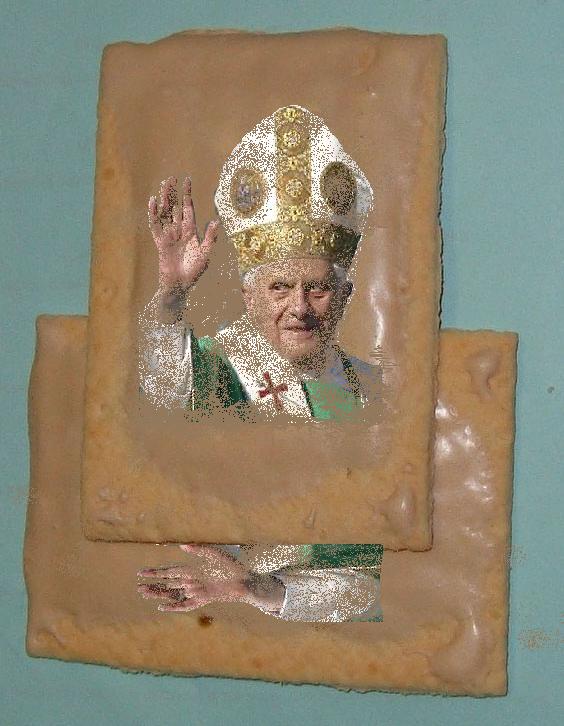
PopeTarts™ and Popesicles™: NEW ecumenical booster merchandise!


You may purchase these tasteful PopeTarts™ and Popesicles™ by contacting the merchandise department in the comment box. A nice feature of the PopeTarts™ ($50 for pack of ten – plus free cardboard packaging): if you squeeze them in the middle, it repeats a variety of liturgical exclamations in Latin (remove electronic device before consuming). There are a variety of tastes to suit your ecumenical desire, from plain old chocolate to honey glazed barbequed cherub.

The Popesicles™, at just $15 a pack*, are made to taste of incense smoke. Other flavours will be made available in the new year.

We are presently working on Prayer Beads that double up as an Mp3 player, and statues of the Virgin Mary with moving eyes.

* Contains 1 Popesicle. May contains nuts, snot, hair, ice, dairy products or meat.

CTRVHM goes all ecumenical

In the spirit of Christian unity the Chris Tilling Really Very Holy Ministries (CTRVHM) merchandise department have produced a range of products to promote ecumenism and cultivate mutual respect within the body of Christ.

Of course, a few years ago we already made the announcement, out of generous love for really weird Christian denominations, that the staff at CTRVHM would cease wiping their bottoms with literature representing different theological positions to ours (which meant actually buying loo roll – ecumenism costs*). But today we are going a step further than that and reaching out a gracious hand of fellowship even to Roman Catholics.

You may purchase these tasteful PopeTarts™ by contacting the merchandise department in the comment box. A nice feature of the brown version is that if you squeeze it in the middle, it repeats a variety of liturgical exclamations in Latin (remove electronic device before consuming). There are a variety of tastes to suit your ecumenical desire, from plain old chocolate to honey glazed barbequed cherub.


Alternatively, our new Popesicles™, at just $15 a pack* are made to taste of incense smoke. Other flavours will be made available in the new year.

We are presently working on Prayer Beads that double up as an Mp3 player, and statues of the Virgin Mary with moving eyes.

* $3 a month, usually. Unless we've eaten too much Indian takeaway. Then it is at least doubled.

** Contains 1 Popesicle. May contains nuts, snot, hair, ice, dairy products or meat.


Wednesday, November 26, 2008

Over-realised eschatology thinking

A good reason to write a post like the previous is interestingly found in the claims on the back of a book noted by Nick Norelli recently, Beale's The Erosion of Inerrancy in Evangelicalism: Responding to New Challenges to Biblical Authority. What Beale actually claims remains to be seen when I purchase a copy, but the blurb reads:

'When postmodernism preys upon propositional truth, Christians—and Christian scholars—can be tempted to redefine words like "error," "truth," and "inspiration." But if propositions are no longer secure, what exactly does it mean to say that the Bible is true?'

It goes on to speak of 'leading postmodernist, Peter Enns'! All of this sounds quite silly, and it reminds me how important it is to actually read the bible before being taken hook, line and sinker by such notions as 'secure propositions'. In fact, this strikes me as the symptom of an (albeit understandable) yearning for the eschaton, but framed like this ultimately leads to over-realised eschatological grasp of reality. I suggest a meditative think on the proposition found in Psalm 66:4!

(For some earlier Chrisendom reflections on scripture and propositional revelation – you know you want to read them! – see here and here)

The nature of biblical propositions

In a prayer time recently I meditated upon a verse in Psalm 66 (using the helpful method of repeating the text aloud stressing one word in the sentence only, then repeating the sentence and stressing the next word until the sentence is complete), namely:

'All the earth worships you; they sing praises to you, sing praises to your name' (Ps 66:4)

What struck me about the sentence is the nature of its claim on reality. Ask yourself: Does the whole earth worship God? Does it all 'sing praises' to Yahweh? What about idolatry, sin, corruption, the destructive eruptions of chaos, etc.?

Perhaps one should read 'all the earth' as 'all the (promised) land', though M.E. Tate speaks here, in his Word Biblical Commentary on Psalms 51-100, of praise 'by all who live on the earth' (p. 149). Either way, though especially if Tate is right in his assumption, what an astonishing claim! Are we to really believe that 'all in the earth', whether the whole world or even just the whole land, worships God, sings praises to God?

My suggestion: this sentence of praise is best taken, in terms of its propositional claim on reality, as an eschatological statement. It points to a hoped for reality. But as I pondered this, it struck me that this is true of so much biblical material to a great or lesser extent. While there is nothing in the context of the Psalm itself to read such an eschatological accent into it, does not its truth claim push it into a future? Indeed, there may be nothing in the context of other biblical proposition, but many of them, especially positive statements about God, all claim a stake in a reality that is yet to come, one that is in the hidden future and coming of God.

I think if we could grasp this more profoundly, perhaps we would be unleashed to develop our doctrinal thinking with more boldness, freshness and truthfulness, in a way that is more accustomed to walking on the water, less disturbed by the waves and wind of a world still yearning for its eschatological reality to materialise. And recognising this, maybe we would also judge our own theological statements (whether Calvinistic, Arminian, Reformed, Open Theistic or whatever) with more humility, as always penultimate to God's glorious advent.

Monday, November 24, 2008

Quote of the Day

'"Dogmatic" theology is rational, but its axioms must be fluid rather than fixed'

(LeRon Shults, Christology and Science, 134a terrific book, one that I will review soon)

Sunday, November 23, 2008

Creation or Evolution

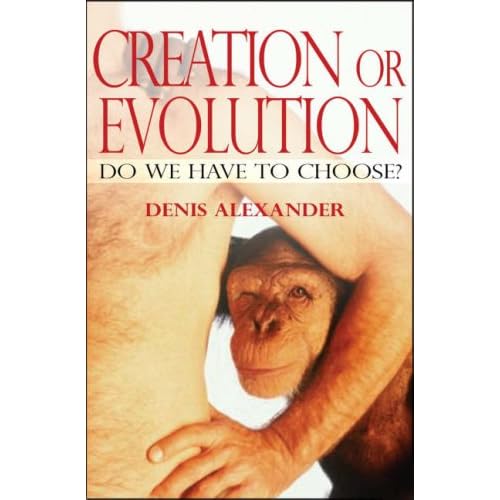
The Dean of St Mellitus brought a new book in for our growing library the other day. I, um, promptly bagged it and took it home. Suppose I shouldn't say that here, but hey ho - 'sin boldly' as Luther wrote to Melanchthon. The item in question is Denis Alexander's new book, Creation or Evolution: Do We Have To Choose? His book Rebuilding the Matrix is an absolute gem. A part of me is a bit bored with the whole creationism-evolution hubbub, but this book will no doubt be worth your investment.

The St Mellitus College Collect

I'm sad, of course, to have missed SBL this year, but I've been away for the past few days at a St Mellitus residential weekend, delivering a couple of lectures on Luke. Phil Ritchie (Director of Lay Ministry Studies) posted the St Mellitus college collect a while ago

God of grace and wisdom,
who called your servant Mellitus
to leave his home and proclaim your Word:
grant to all who belong to the college that bears his name
diligence for study, fervour for mission,
and perseverance for ministry,
that they might shine with your love and truth
in these dioceses and beyond,
for the sake of your Son, our Saviour, Jesus Christ. Amen.

(To the tune of MC Hammer - U Can't Touch This)

For many years as an evangelical I never heard about 'collects'. Can't get enough of them these days. Though recent escapades into traditional liturgical forms of worship have made me also appreciate more 'charismatic' or 'free' forms of worship, I would advise all in the evangelical tradition to pick up the Anglican prayer book. My personal favourite is Celebrating Common Prayer.

Wednesday, November 19, 2008

Gentiles as the return from exile people

Michael Barber once wrote a tremendously through provoking post on the salvation of 'all Israel'. Among other things he suggested that Paul saw the restoration of the lost northern tribes as directly associated with Paul's mission to Gentiles, suggesting a closer link between the lost tribes and the Gentiles.

Michael summarises part of a Scott Hahn essay with these words: 'God allowed Israel to be exiled so that he could use them to eventually bring the nations home as well--as their relatives'. Among other passages very ably discussed, Michael notes especially the way Paul applies a passage in Hosea 1, which originally spoke of the northern tribes, to Gentiles (Hosea 1:10 'where it was said to them, "You are not my people," it shall be said to them, "Children of the living God". Cf. Romans 9:26). One could add material in 2 Corinthians 6:16-18 to this too, where the return from exile people ('come out from them, and be separate from them, says the Lord' – i.e. come out from the nations!) are equated with the Corinthian Christians! Amazing! (cf. here for a few references on this)

Does this mean the Gentiles are the lost northern tribes? Or as Hahn implies, their relatives? Or perhaps the Gentiles are simply symbolically represent the lost northern tribes? Or are the Gentiles made holy, included in to the line of Abraham, because of intermingling with the northern tribes (cf. Rom. 11:16)? Or are they related in some other way? Love to read your thoughts…

Tuesday, November 11, 2008

The Church of the Holy Sepulchre showdown

Forget Ali's "The Rumble In The Jungle", WWF, the Undertaker, etc. This week CTRVHM is selling front row seats for the next clash between the two rival Orthodox sects in the Church of the Holy Sepulchre. While many commentators have rightly pointed out the travesty and sadness of this event, its perversion of Christian virtue and its stomach churningly terrible witness, what the public really wants to see now are more split lips.

So for a mere $6,000, CTRVHM will not only fly you out from Atlanta or Heathrow to the church itself, but buy you pew space for the next show down. Included in the price is a brochure with pictures and bios of the biggest monks, scarves with the names of your chosen sect or monk and various other CTRVHM memorabilia.

One happy customer has already described the delight of watching two of the young monks hack at each other with a variety of liturgical instruments. 'I saw this monk', one happy CTRVHM customer animatedly reported, 'smash a pot of incense into this other bloke's head'. Yet another excitedly thanked CTRVHM for their ministry and told how one monk chanted that he was going to 'make me his bitch' if I didn't stop filming. 'Luckily the police took him down in the nick of time'.

Order seats now while they remain. For booking fees and terms of use, please contact the offices.

Monday, November 10, 2008

Godpod 39


Gordon Wenham

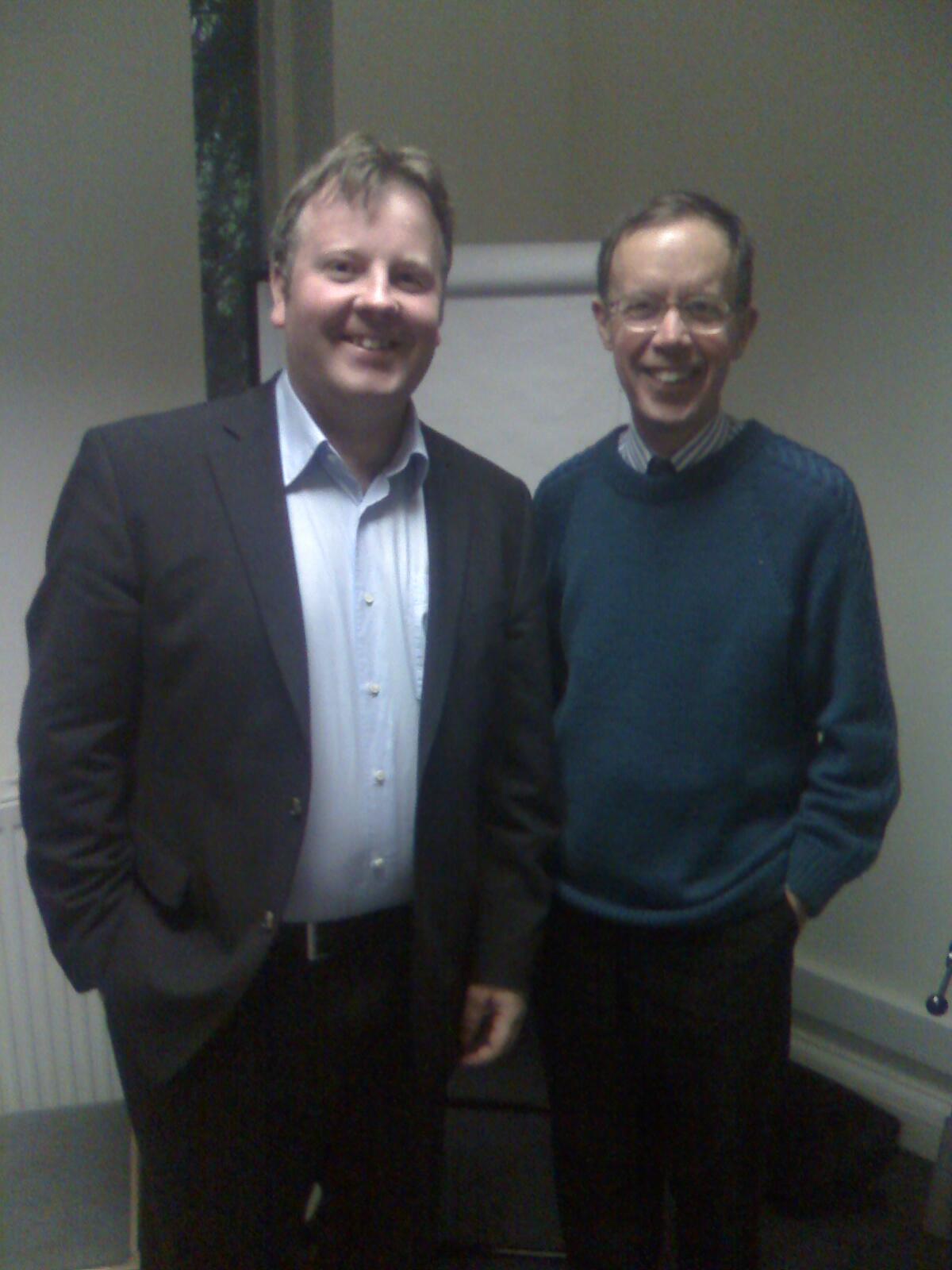
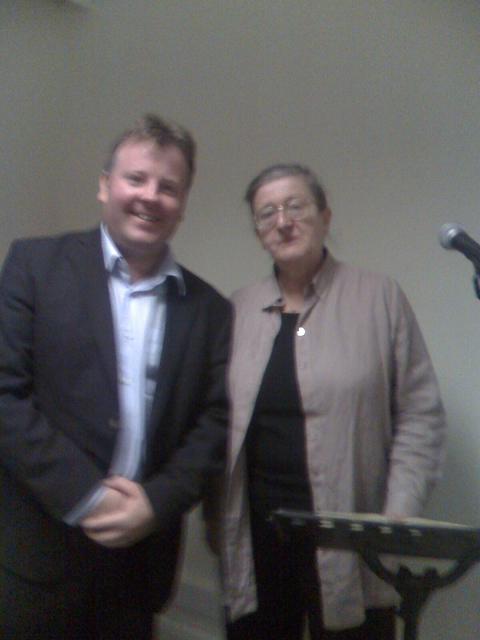
Today I had the pleasure of introducing Prof. Gordon Wenham for a guest lecture to our second year OT class. At the start of the year I specifically decided to decline giving lectures on two OT themes, namely 'holiness' and 'righteousness and justification'. For obvious reasons. So it was a real honour to have him speak to us on the matter of 'holiness'. Besides, Gordon is a world-class internationally renowned OT scholar, and I'm, well, still wondering if Adam had a bellybutton or not. A true gentleman if ever there was one, here is a picture we took of Gordon and myself today.


Spot the difference competition

The two pictures of Zwingli below have been slightly altered, in 5 ways, to differ from one another. Can you spot all 5 changes?


UPDATE: People are finding this one difficult, so I offer here just one of the changes pointed out by Brandon to help you:

1) The turd on the left is wearing a hat

Exegetical comment of the day


Joshua 11:12-15 12 And all the towns of those kings, and all their kings, Joshua took, and struck them with the edge of the sword, utterly destroying them, as Moses the servant of the LORD had commanded. 13 But Israel burned none of the towns that stood on mounds except Hazor, which Joshua did burn. 14 All the spoil of these towns, and the livestock, the Israelites took for their booty; but all the people they struck down with the edge of the sword, until they had destroyed them, and they did not leave any who breathed. 15 As the LORD had commanded his servant Moses, so Moses commanded Joshua, and so Joshua did; he left nothing undone of all that the LORD had commanded Moses.


Goldingay comments on these verses:

'So did Joshua and the people do what Yhwh had said via Moses (Josh 11:15)? Yes. Well, no. Well, yes. Well, no. Well, yes' (OT Theology 1.465)!

Friday, November 07, 2008

What happens to the Land in the NT?

First, the matter of land is surely not absent in the NT (cf. the geographical land divisions in the first chapters of Luke, Acts and the language of the restoration of the tribes etc.). Barry E. Horner in Future Israel (while I haven't read it all- far from it – this is a book that has actually wound me up rotten!) argues:

'Romans 11:29. "God's gracious gifts and calling are irrevocable." The plurality of the "gracious gifts," ta charismata, surely follows on, by way of explication, from that which is declared secure according to the Abrahamic Covenant originating from "their [Israel's] forefathers," v. 28. Of course from a Hebrew perspective, the "gifts" include saving grace for Israel, yet surely more is included such as the encompassing covenant blessings of 9:4-5 that would unquestionably include the land' (276)

So it remains, but is surely treated differently, with different emphasis (is thus transformed). Is it:

  • Spiritualised? Inheritance in Paul becomes the Spirit, not a strip of land in Canaan. Cf. eternal life language in John
  • Displaced in person of Christ?: On the basis of Eph. 2:11-22; 3:6; Heb. 4:1-11; John 4:20-26, Chris Wright argues that 'Christ himself, therefore, incorporates and fulfils the significance of the land, as he did also for the law, the covenant, the temple, the king, the priest hood, the prophetic word, Wisdom etc... The effect of this, however, was far from being merely a spiritualizing evaporation of all the great social and economic themes associated with the land in the OT. The reality of Christian koininia in Christ included such practical aspects of inclusio, authority, lifestyle, and socioeconomic responsibility in ways that clearly reflect these same dimensions of Israel's life in the land' (New International Dictionary of Old Testament Theology and Exegesis, 1.524). Cf. also WD Davies.
  • Transformed as the eschatological promise of resurrection?: 'The language of the promised land was understood by many Jews at the time as an eschatological promise of resurrection life beyond the grave (Dan 12:13; Wis 5:5; Shemoneh 'Esreh 13; Dead Sea Scrolls: 1QS 11:7-8; 1QH 11:10-12). This "promised land" of Israel's was being inherited by the Christians, says Paul.' (Cited in Gregory MacDonald's The Evangelical Universalist)
  • Brueggemann: 'it is here urged that the land theme is more central than Davies believes and that it has not been so fully spiritualized as he concludes. It is more likely that the land theme can be understood in a dialectical way: in contexts of gnosticism the land theme must be taken in a more physical, historical ways; in contexts of politicizing the land theme must be taken in a more symbolic way' (The Land, 170).
  • Universalised?: Paul recognised that the Abrahamic covenant had universal implications (cf. its narrative context following Gen. 1-11), and so Paul, especially under the influence of his broadly christologically shaped hermeneutic universalised the land as God's intention for the world. So, for example, Romans 4:13: 'For the promise that he [Abraham] would inherit the world did not come to Abraham or to his descendants through the law but through the righteousness of faith'. Compare Eph. 6:2-3 and Deut. 5:16.

Any other suggestions?

Separated at Birth?

News


The Bultmann Official Leitmotif Learners Organisation recently merged with the related Core Concepts Society, becoming the all-new BOLLO & CCS. Together, these academic assemblages make a formidable impression. Now they are together planning a merger with the larger University Term Teaching Educational Rotas (UTTER). Which says it all, really. But the popular Hammersmith –Acton Institute for Royal Yiddish (HAIRY) are contesting UTTER in a bid of their own, which would make the amalgamated society very Big. Watch this space as news unfolds.


Right, back to lecture preparation.

Your collective Wisdom

What modern commentaries (and perhaps collection of essays) would you recommend on the Gospels of John? Any comments on Andreas J. Köstenberger's Baker exegetical commentary on John? Or Craig Keener's?

Wednesday, November 05, 2008

Apologetic strategy of the day

Someone gently asks: 'How do you explain all of the contradictions in the bible?'

  1. Say incredulously 'What contradictions?' and hope they fall for your bluff. If they actually list any contradictions go to step 2.
  2. Waffle about how 'contradiction' is a difficult word to define. However, if they offer a reasonable definition and apply it to a certain set of biblical texts, go to step 3
  3. Mention their thoughts are wicked and that they must really hate all things righteous (roll your 'r'). If their face starts to harden, go to step 4.
  4. Suddenly and forcefully grab a hold of their head with both hands, and rebuke demons of stupidity (and add generational rebellion, lust, greed and paedophilia for good measure). Then take of your anointed 'mantle' (i.e. your jacket), and thwack them round the abdomen as hard as is righteous.
  5. Walk away from yet another ministry success.

Or, say something like 'Real life is full of contradictions and paradoxes. If the Bible is not merely a collection of abstract philosophical propositions but a collection of books written from the context of and about real life in all its grit and joys, grim and rapture, why, then, should there be no contradictions? Perhaps we should start judging the Bible according to what it is, not what it never was or never claimed to be'

Separated at Birth?

Monday, November 03, 2008

Barker's visit

As I mentioned yesterday, Margaret Barker discussed her fascinating theses concerning Temple theology today, and I took the opportunity to get the following picture taken of us both. I also purchased a discounted copy of her brand new book, Christmas: The Original Story, which I am really looking forward to reading (when I get the chance!). Her presentation was not only highly stimulating, but she was very personable and friendly.

I’d be interested to learn what people think about her arguments, where there is room for improvement or even complete overhaul, what has shed fresh light on the evidence or utterly convinced you. While I am actually not too convinced that there was a specific 'temple theology' that was so completely essential for early Christians as she maintains - and I am even less convinced by the 'YHWH as Son of the Most High' proposal -, I will re-read some of her arguments in the near future with a renewed hermeneutical openness.


Sunday, November 02, 2008

Margaret Barker to visit St Paul’s Theological Centre

Tomorrow we at St Paul's (and St Mellitus) have the privilege of enjoying Margaret Barker as a guest lecturer on our second year Bible and Theology course. She will speak about Temple theology. Here are some of the facts that I will mention by way of introduction, much of which is adapted from her own webpage:

  • She read theology at the University of Cambridge, and now has approximately 13 books to her name. And there is a new book either to be or just freshly published, namely Christmas. The Original Story.
  • In July 2008 Margaret Barker was awarded an honorary Doctor of Divinity degree by the Archbishop of Canterbury 'in recognition of her work on the Jerusalem Temple and the origins of Christian Liturgy, which has made a significantly new contribution to our understanding of the New Testament and opened up important fields for research.'

Something about the things she has been involved with.

  • In 1998 she was greatly honoured and elected President of the Society for Old Testament Study.
  • She is currently the Editor of the Society's Monograph Series.
  • 1997, she has been part of the symposium Religion, Science and the Environment, convened by the Orthodox Church's Archbishop of Constantinople, Bartholomew I, the Ecumenical Patriarch.

Pretty impressive, really. While I personally disagree with quite a few of her proposals, there is no doubting that she is a uniquely creative author, spotting all kinds of interesting conceptual connections that all the rest have not even noticed. And the breadth of her grasp of the primary literature is simply stunning. I’ll try to remember to take some snaps!

Link of the day

Perriman responds to a critical review of his uniquely stimulating and provocative book, The Coming of the Son of Man. Give it a read, here.

Separated at Birth?

Zwingli and the blue hairy Yeti of Monsters Inc.

The eyes and mouth do it.